August 18, 2026
Cliffena Gibson grew up watching her father working long hours as a master builder. He’d wake up at 4 a.m. to run different crews, and handle his own bidding, engineering, and payroll. Initially she wasn’t sure if a career in the trades was for her. But when she began looking for a career change, she circled back to the industry where her father had found success. “I was looking for something that could create sustainable income, where I didn’t have to go to school for a long time,” she said.
Today, Gibson helps keep construction projects safely moving across the region, including work at the Port of Seattle's Maritime Innovation Center at Fishermen's Terminal.
The Port of Seattle partners with regional agencies, construction trade unions, contractors, and training institutions to help remove barriers for people entering construction careers. On construction contracts valued at $1 million or more, the Port establishes apprenticeship hiring goals that expand opportunities for local workers, women, and people of color.
Through its Apprenticeship and Priority Hire programs, the Port creates pathways into construction careers for workers from all backgrounds, especially those from communities that have historically faced limited access to opportunity.
Journey to a new career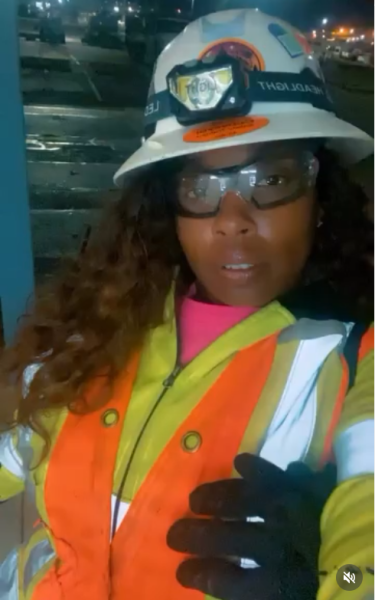
While driving through a road construction project in Federal Way, Gibson noticed something she hadn't expected: women directing traffic throughout the work zone. Curious, she pulled over and asked how she could get started. She signed up for an Evergreen Safety Council course held at Goodwill in Burien. Through the course she found out about Laborers’ Local 242, a union representing general construction laborers including traffic safety control workers, and its apprenticeship program. Interested in becoming a Traffic Control Supervisor apprentice, she attended an apprenticeship program orientation. Traffic Control Supervisors are responsible for setting up signs and cones, executing traffic plans, and positioning flaggers at construction sites.
The apprenticeship program received 126 applications for 25 spots but Gibson was persistent in following up. When the program coordinator asked her, “What would becoming an apprentice mean to you?” she shared that it would mean financial stability, living a long and healthy life, taking care of her family, and creating generational wealth. Her answer was enough to set her apart and she gained a spot in the program.
Before starting the program, Gibson had to complete what is known as “hell week,” a combination of physical testing and a written evaluation for certification. With a fear of heights, one piece Gibson found particularly challenging was building a two-story scaffold and taking that scaffold down while she was still on it. To get through this mental and physical challenge, her father, whose specialty was working on roofs, was her inspiration.
Today Gibson is about 60% through her Traffic Control Supervisor apprenticeship. Once she completes the required hours, she'll become a journey-level Traffic Control Supervisor, fully qualified to oversee traffic safety operations. She is committed to taking her time getting through the program. “I’ve learned you should not rush to journey out if you want to learn the business or the trade,” she said. “If you don’t have balance you will burn yourself out.”
While building her apprenticeship career, Gibson also launched Pacific Link NW, her own certified minority-, LGBTQ-, and disadvantaged business enterprise, positioning her company to compete for public-sector work.
Finding inspiration
Gibson is proud to have inspired her son to also pursue a career in the trades. “I have all this information for him to be able to navigate (the industry) more efficiently,” she said. “It doesn’t matter what stage in life you are at; if you persevere you can achieve a lot of things.”
Throughout her apprenticeship experience she’s had the opportunity to work with woman in a variety of skilled trades roles, including carpenters and forklift and boom lift operators, often in journey-level roles, and hopes to inspire other minority women considering a career in the trades. She currently works for T&T Traffic Control, a woman- and minority-owned business that prioritizes hiring minority women.
She said maintaining her personal style while working in the trades can be challenging, but she shows up 100% as herself — wearing pink Personal Protective Equipment (PPE), lip gloss, and eyelash extensions.
Connecting to resources
The Port and regional partners are committed to investing in strategies that set apprentices up for long-term success. This includes connecting workers who face barriers with coordinated support systems that offer training, counseling, basic‑needs assistance, and job search or placement services.
Gibson’s work on Port projects has helped her make valuable professional connections. She has used resources from the Port’s Diversity in Contracting Program and attended workshops on how to contract with the Port and earn certifications that help small minority-owned businesses grow. These resources reflect the Port’s commitment to creating equitable connections to family-wage careers while building projects that serve the region.
For Gibson, the journey has been about more than finding a new career. It's about building financial stability, creating opportunities for her family, and showing others that it's never too late to pursue a new path.
Helpful resources and programs that have supported her along the way include:
Subscribe to Connections for news and updates from the Port and SEA Airport