
November 9, 2026
Like most airports, Seattle-Tacoma International Airport (SEA) has large tracts of open, unimproved land that provide an added buffer for both safety and noise mitigation … and an appealing home for animals. Wildlife and airplanes are a less than optimal combination, so SEA has a few strategies for keeping them separate and safe. A coyote deterrent fence around the perimeter of the airfield keeps most larger animals out, but birds are a bigger challenge as they can fly over the fence and get access to the airfield.
It may come as a surprise that the airport has a robust wildlife management program that plays a vital role in keeping travelers, facilities, employees, and wildlife safe.
Here are five things you may not have known about SEA's wildlife program.
1. SEA has full-time wildlife biologists on staff
In 1976, SEA was the first U.S. airport to employ a full-time biologist and to develop an ecological approach to maintaining aviation safety and protecting wildlife. It’s now become common for larger airports to have biologists on staff.
SEA has the oldest wildlife program in the country — celebrating its 50-year anniversary this year (2026) — that keeps both animals and people safe by reducing the chance that the two never meet on the runway or in the air.
Meet an airport wildlife biologist.
2. SEA is a world leader when it comes to using technology to avoid bird strikes
Another first for SEA Airport came in August 2007, when it became the first airport in the world to use avian radar in a long-term monitoring effort to detect potentially hazardous bird activity on and near an airport. The radar acts like a powerful pair of eyes that see much farther and higher than human observers, who are limited to viewing only during daylight hours. When substantial bird hazards are detected, the radar alerts Airport Operations responders who investigate the area to encourage the birds to move away from the airfield.
3. SEA Airport traps and relocates birds of prey to keep them off the airfield
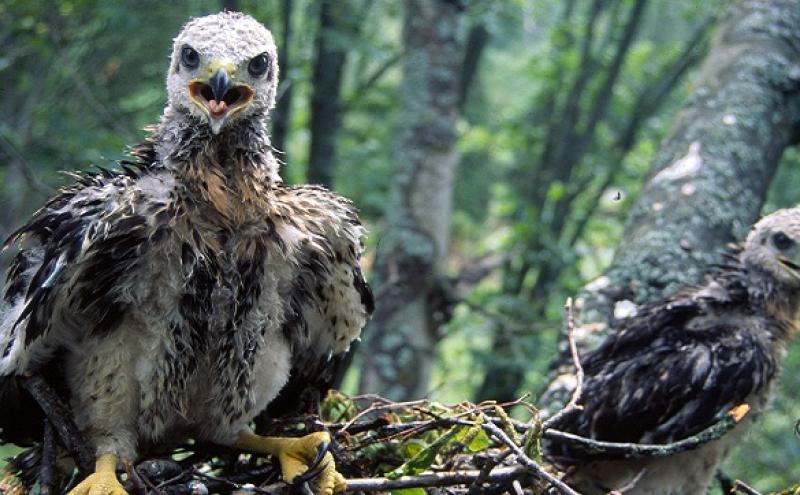
Through the Raptor Strike Avoidance Program, biologists trap birds of prey on the airfield and safely relocate them to Skagit County. The program moves well over 100 birds a year and helps avoid bird strikes, which can be dangerous for aircraft, travelers, and birds. Red-tailed hawks are one of the largest species near the airport and we spend more time monitoring their hunting and breeding behavior than any other species at SEA. Bald eagles and mallard ducks are also species of concern at SEA, like many airports.
In addition to relocation, staff also use a variety of (sanctioned) methods to ensure that birds don’t get too comfortable near the airfield: launching firecracker-like pyrotechnics, loud sirens, and other harassment devices.
4. SEA’s wildlife program also includes tracking down our furry friends
Occasionally, pets may wander onto airport property or become separated from owners in the terminal, and biologists work hard to return these pets to their worried owners. Dogs have escaped from faulty kennels on nearby Air Cargo Road and made their way through the coyote deterrent fence. Cats have slipped away from their owners and had to be retrieved from the terminal ceiling and walls. Live traps and snare poles are essential parts of any airport wildlife biologist’s toolkit to help reunite these animals safely with their families.
5. There are bee hives at SEA Airport
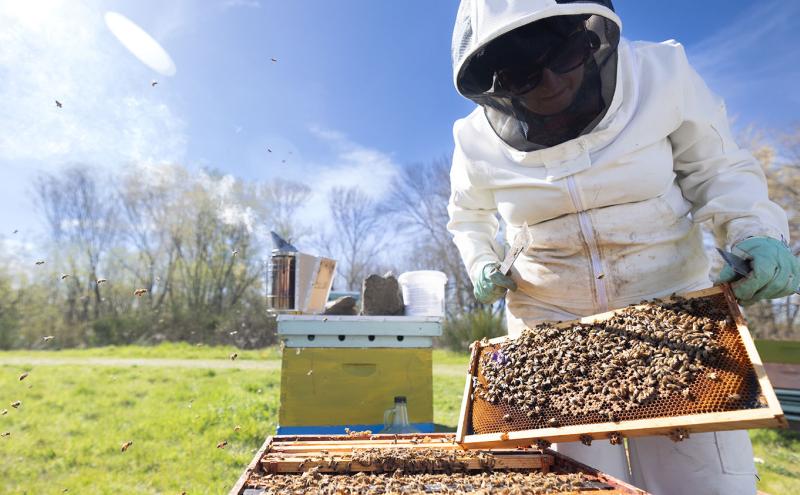
Airports are abuzz with airplane takeoffs and landings and people rushing to make their way to their destination. Amidst that activity, SEA Airport is also home to a large colony of honey bees, an efficient and sustainable ecosystem that benefits the environment. As many as 12 colonies filled with thriving honeybees are located inan apiary on three acres of the former Tyee Golf Course.
The hives have been in place at SEA since 2013, when the Port of Seattle joined forces with local nonprofit The Common Acre to establish Flight Path, a project to turn unused green spaces on the south end of SEA into a native pollinator habitat — and in the process, produced a breed of bees better suited for survival in the coming years.
Subscribe to Evergreen for sustainability updates from the Port of Seattle and SEA Airport