October 29, 2026
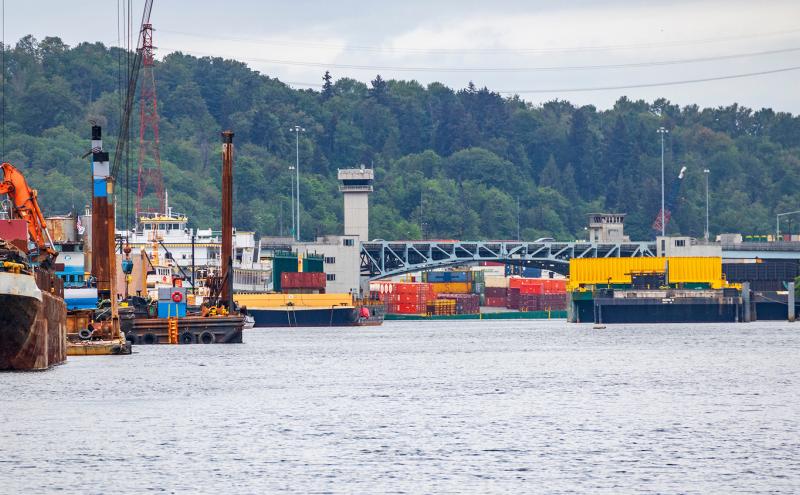
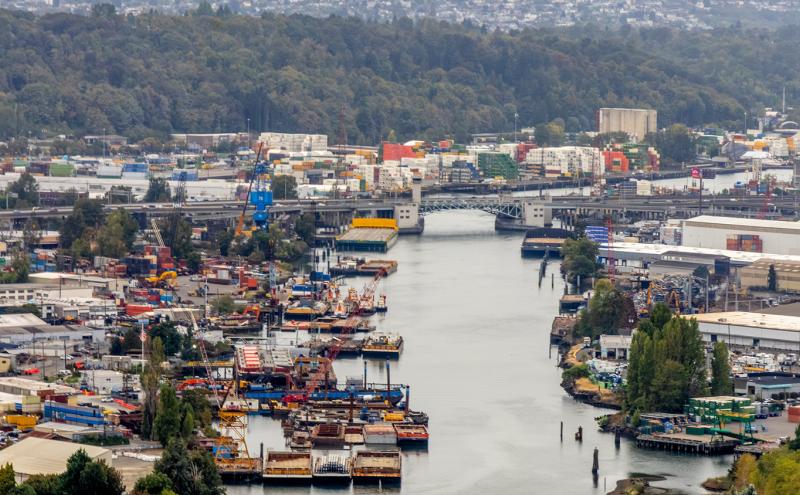
The Duwamish River — specifically the Lower Duwamish Waterway — is Seattle's only river and a vital industrial shipping corridor. It flows through the industrial core of Seattle, passing through South Park and Georgetown neighborhoods, before reaching Harbor Island and flowing into Elliott Bay. The river provides important community assets; recreational, subsistence, and cultural fishing; tribal cultural heritage resources; and is a critical estuarine environment for salmon and wildlife. The Duwamish has also played a crucial role in developing our region’s economy for over a hundred years.
But over time industrial development has degraded estuarine, riparian, and freshwater wetland environments. The Port is actively engaged in shaping the river and surrounding community’s future through cleanup efforts, habitat restoration, and community partnerships. Keep reading to explore the history of the Duwamish River and its impact on the economy, community, and wildlife.
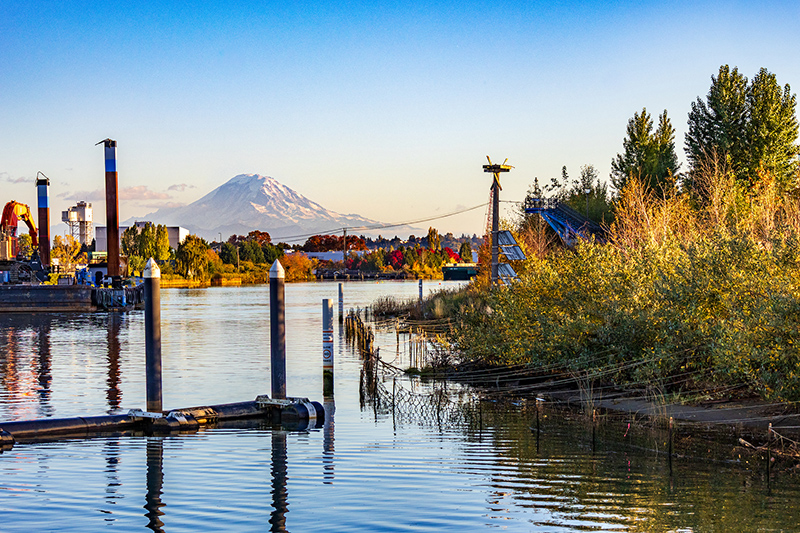
A river shaped by history
The landscape surrounding the Duwamish River was shaped over thousands of years by glaciers and volcanic activity from Mount Rainier. Over time, the river carved through the valley, creating an estuary that supported salmon, wildlife, and indigenous communities.
- Human settlement goes back in the area as far as 12,000 years
- As of 1851, 17 villages and 90 longhouses were recorded along the Duwamish River and Elliott Bay, known as one of the largest Coast Salish settlements
From estuary to industry
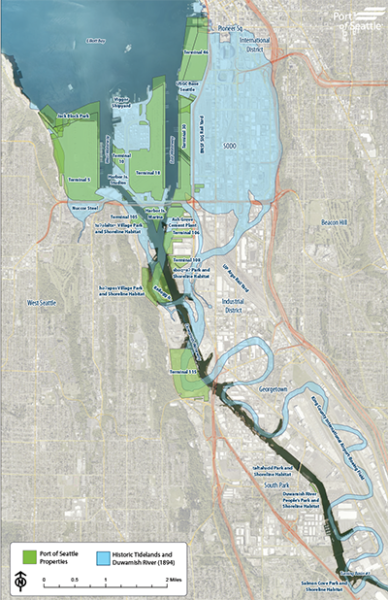
Imagine being able to walk across a sand flat from Smith Tower in downtown Seattle to West Seattle at low tide. Before industrial development reshaped the shoreline, the Duwamish estuary looked dramatically different from the waterway we see today.
In the early 1900s, 5,300 acres of estuary were filled to create today’s industrial core — making up 80% of Seattle’s industrial land. Once the world’s largest manmade island, Harbor Island was created at the mouth of the Duwamish. As a result, just 1% of historic wildlife habitat remains. To further pave the way for industry, the Duwamish River was straightened, replacing a 19-mile winding, natural river with a 5.3 mile engineered channel. Twenty million cubic yards of mud and sand were moved to fill the river bends and deepen the main channel for shipping. Today local maritime and industrial businesses employ over 100,000 people and support more than 25% of the manufacturing in King County.
Powering the region
The Duwamish is home to the following Port-owned marine cargo terminals: Terminal 5, Terminal 18, Terminal 30, Terminal 46, and Terminal 115, as well as maritime industrial sites such as Vigor shipyard, which supports Navy and Coast Guard vessel upgrades and employs 650 union workers locally — critical to the region’s maritime workforce.
Over the past two decades, the Port has invested hundreds of millions of dollars in modernizing Seattle’s container terminals. Improvements, including deeper navigation channels, help accommodate larger container ships that rely on the channel and keep the terminals at the forefront of regional and international trade.
Tribal partnerships
Coast Salish Tribes hold federally protected treaty rights and actively manage and operate commercial, ceremonial, and subsistence fisheries in the Duwamish River and Elliott Bay. The Port maintains Memorandums of Understanding (MOUs) with the Muckleshoot Indian Tribe and the Suquamish Indian Tribe. Through the MOUs, the Port partners with the Tribes on workforce development, economic development, and regional maritime infrastructure.
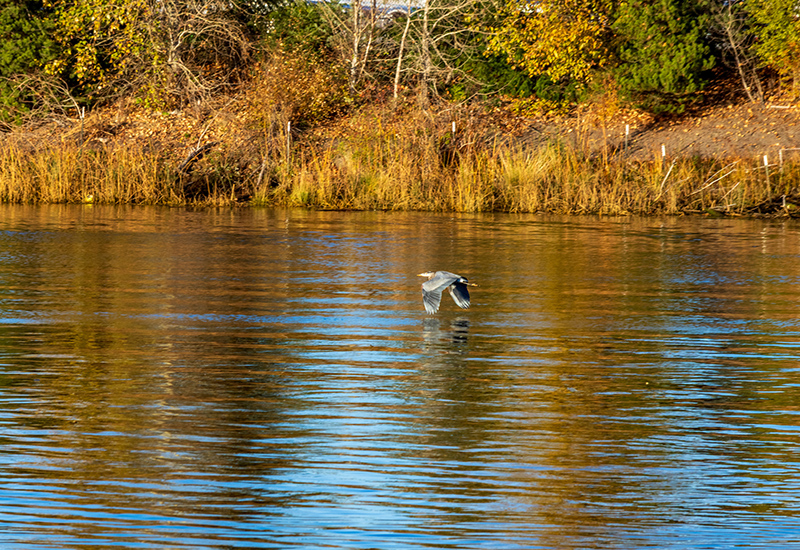
Restoring critical habitat
The Environmental Protection Agency (EPA) designated the Lower Duwamish Waterway a Superfund site in 2001. The Port initiated a groundbreaking partnership with King County, the City of Seattle, and The Boeing Company to investigate and address contamination at the Superfund site. For over 20 years, the Port has provided extensive staffing and financial resources toward the cleanup actions in the interest of ensuring that this work advanced, even though none of the Lower Duwamish Waterway’s most contaminated areas are attributable to the Port or its tenants.
As part of this work, the Port led clean up and habitat restoration work at Terminal 117, transforming the previously contaminated site to a public park and habitat reserve — Duwamish River People’s Park and Shoreline Habitat (DRPP). In the process, the Port removed 55,000 tons of contaminated soil and installed over 20,000 native plants. This large-scale restoration project supports recovery of the endangered Southern Resident orca population by significantly increasing habitat critical to abundance and health of Chinook salmon.
Additional cleanup and restoration are underway at Terminal 25 and other Port-owned sites. The Port is making progress toward its goal of restoring 40 acres along the Duwamish, with 14 acres completed and 10 acres in the planning stages. Dredging along the West Waterway, serves both to deepen the channel for larger ships and supports contaminant removal.
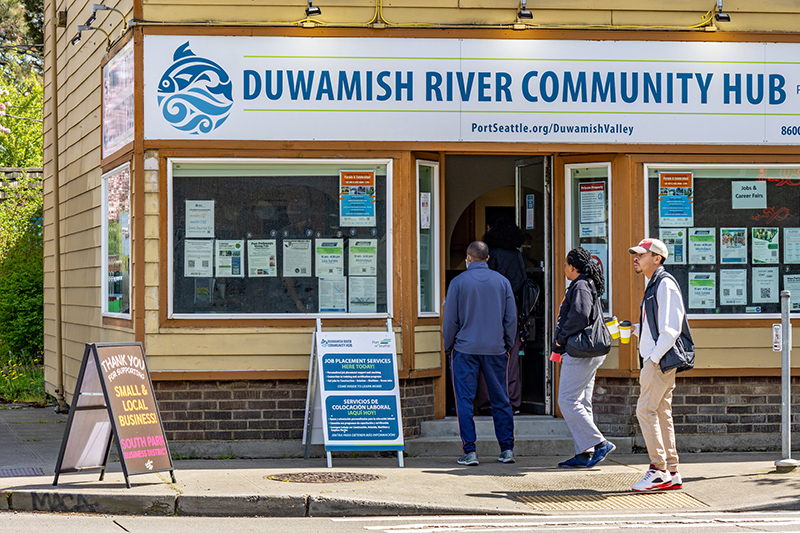
Community collaboration and equity
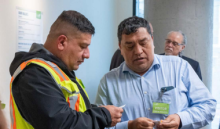
Established in 2017, the Port’s Duwamish Valley Community Equity Program focuses on economic opportunity, quality of life, and environmental responsibility in communities surrounding the river. Through sustained relationship-building, such as the Port Community Action Team (PCAT) and regular outreach, the Port works with community members to bring local perspectives into decisions that could affect their neighborhoods.
The Port has also established the Duwamish River Community Hub in South Park which offers meeting space, educational and job-placement services, and more direct access to Port staff. The Port continues to invest in environmental programs focused on habitat restoration, including restoring sustainable shorelines for salmon habitat, exploring innovative solutions such as “biobarges,” and holding regular events and learning opportunities for the community to stay informed and involved in the Port’s environmental work around the Valley.
Explore parks and public access
Want to experience the Duwamish River for yourself? Public access points and parks along the shoreline offer fishing piers, bike and walking paths, an exercise course, and picnic areas, along with opportunities to explore the waterway, watch wildlife, and learn about the area's industrial and natural history.