September 4, 2026
On September 5, 1911, King County voters made a momentous decision: they overwhelmingly voted to create the Port of Seattle, one of the first public ports in the country.
Why? Seattle was booming, and the community wanted to make sure its waterfront was managed for the public good, not just private profit.
Fast forward 115 years, and that mission has taken us a long way. The Port has grown into a major gateway for global trade, travel, and jobs. From our fishing fleet and container ships to cruise lines and Seattle-Tacoma International Airport (SEA), the work we do connects our region to the world and creates opportunities here at home.
So, here’s to celebrating how far we have come since 1911, and the progress we have made as we build the Port for the Future. Let’s take a trip down memory lane and look at some of the changes over the years. Though locations and buildings might have changed, we remain steadfast in moving the region forward.
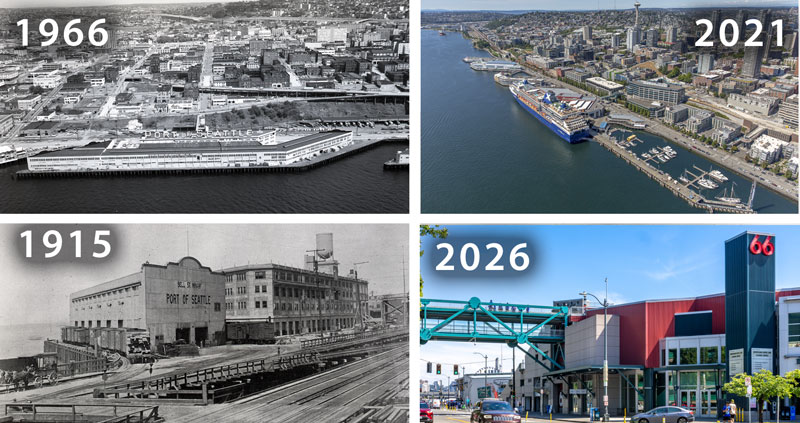
Pier 66 / Bell Harbor
Today’s Pier 66 was once known as Bell Harbor Wharf. Open in 1915, it served as a working pier, storage facility, fish processing center, and Port of Seattle headquarters. The Port moved its headquarters to nearby Pier 69 in 1991 and has redeveloped Pier 66 into a world-class cruise terminal, marina, and conference center.
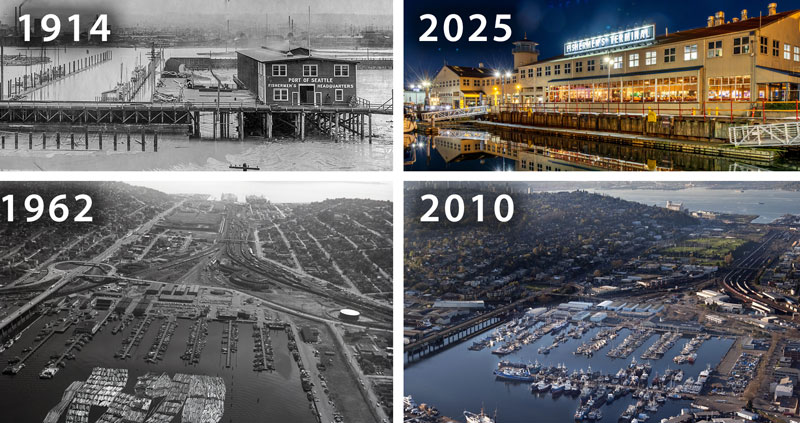
Fishermen’s Terminal
Fishermen’s Terminal was the first port facility constructed, opening as a “snug harbor” for the fishing fleet to lay up during off season to offload the catch, make repairs, and reprovision the ships. Today it remains home to the North Pacific Fishing Fleet.
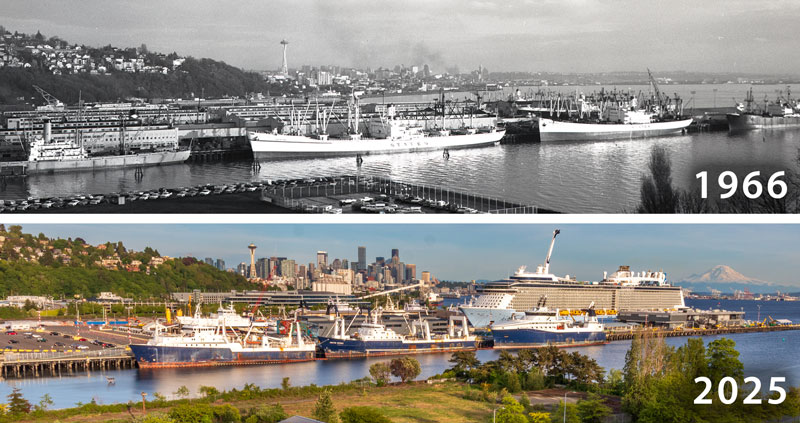
Terminal 91/ Smith Cove
Smith Cove, located on the north end of Elliott Bay, was originally owned by the Great Northern Railway, that operated the piers and the terminus of the transcontinental line. The Port purchased the site in 1915, built two 1,400-foot-long cargo piers, and operated this facility until the US Navy took over in 1942. After serving as a Navy supply depot for more than three decades, the Port repurchased Smith Cove in 1976. Since then, the piers and uplands have supported industrial uses, fish processing, cold storage, and auto imports. Today you’ll find the busy Smith Cove Cruise Terminal, which along with the Bell Harbor Cruise Terminal, served 2.1 million passengers in 2026 and handled 330 ship calls. And for more than 100 years, the North Pacific Fish Fleet, homeported at Terminal 91 and Fishermen’s Terminal, has fed the world and the economies of the Pacific Northwest and state of Alaska.
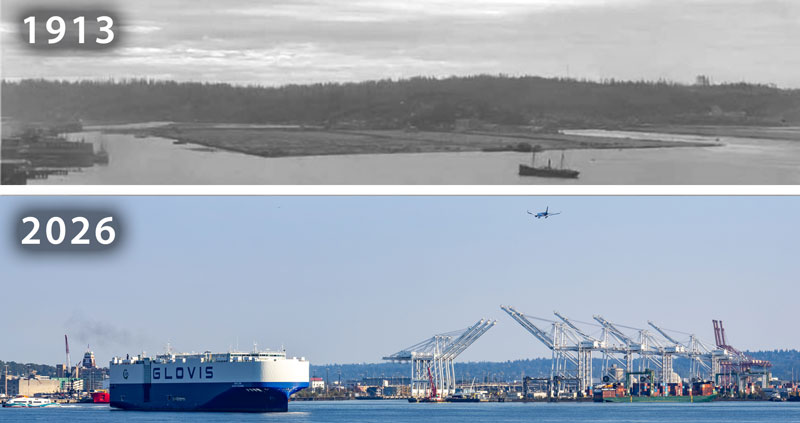
Harbor Island
Harbor Island, located at the mouth of the Duwamish River, was at one point the largest man-made island in the world. Created with 24 million cubic yards of fill, this island has been home to critical maritime and industrial activity since 1909. The Port’s primary cargo hubs — Terminals 5, 18, 30, and 46 — on the south end of Elliott Bay, together span a massive 439 total acres of industrial waterfront property on and near Harbor Island. The largest is Terminal 18 on Harbor Island, at 196 acres and four berths, closely followed by the newly modernized, 185-acre Terminal 5 that is custom-built to handle the largest mega-ships on the planet.
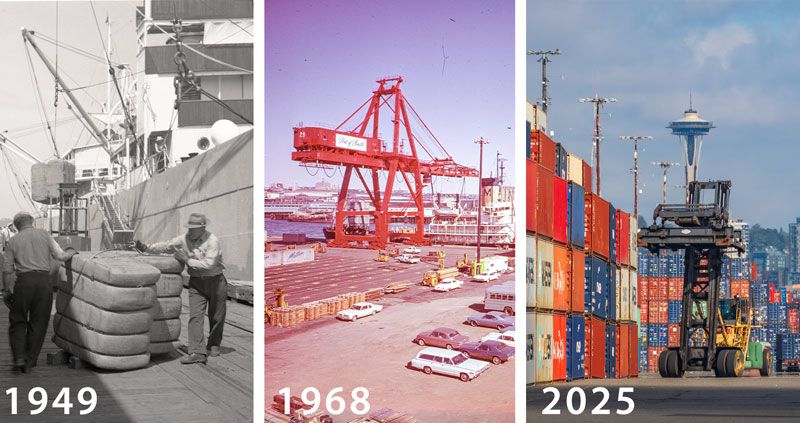
Cargo operations
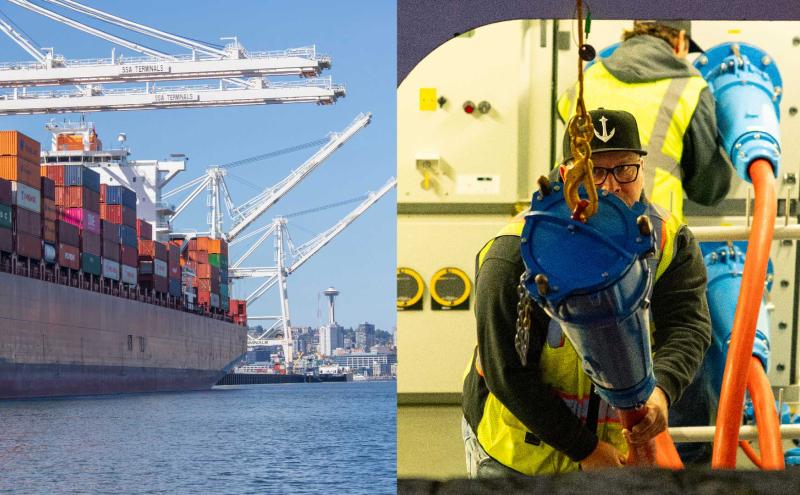
Cargo operations have evolved significantly in 115 years, becoming safer and more efficient. After embracing containerization, the Port opened its first container terminal in 1964. In 2015, the Port of Seattle and Port of Tacoma formed the Northwest Seaport Alliance (NWSA). The combined power of the Port of Seattle, Port of Tacoma, and NWSA drives nearly $55 billion in total economic benefits to the region, with roughly 40% of all jobs in Washington State tied directly or indirectly to trade.
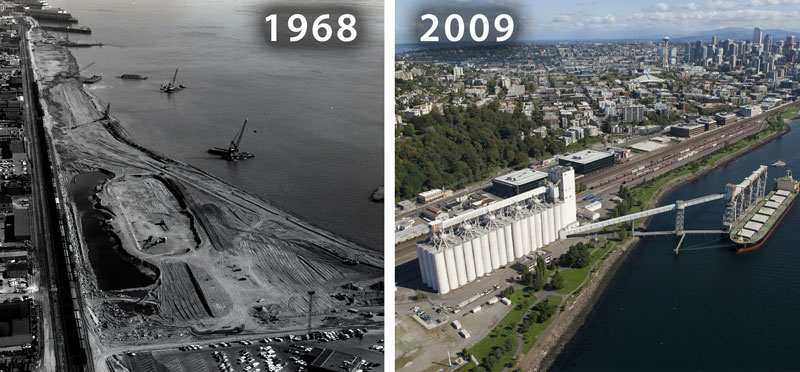
Terminal 86 and Centennial Park
On the north bank of the harbor, you’ll find Terminal 86, the Port’s bulk grain shipping facility. Since 1970, the grain terminal has shipped bulk grain from Midwest and Washington state farmers to global markets — an economic engine that stretches from the fields of the Palouse to mouths around the globe, exporting 5,157,450 metric tons (a total value of $1.1B) in 2025.
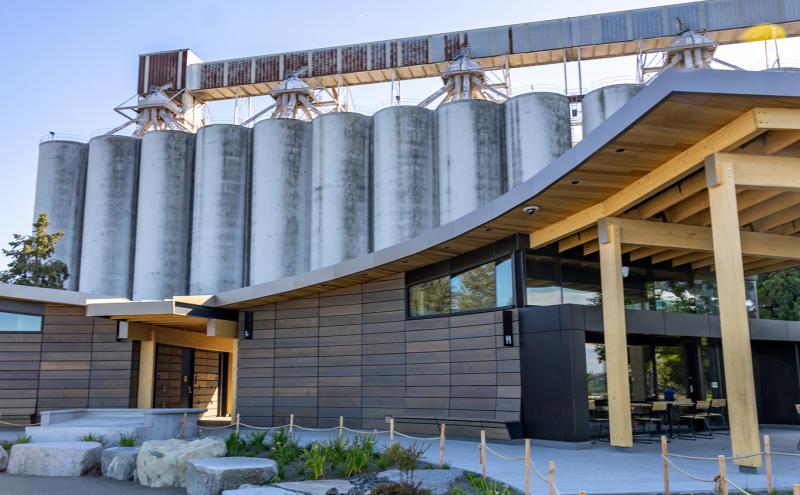
On the same property, you can also stroll through Centennial Park, just one of the Port-maintained 44 acres of parks and shoreline. The park reopened earlier this summer with haʔłali, a new public amenities building honoring the Coast Salish people, and redeveloped landscaping and bike paths.
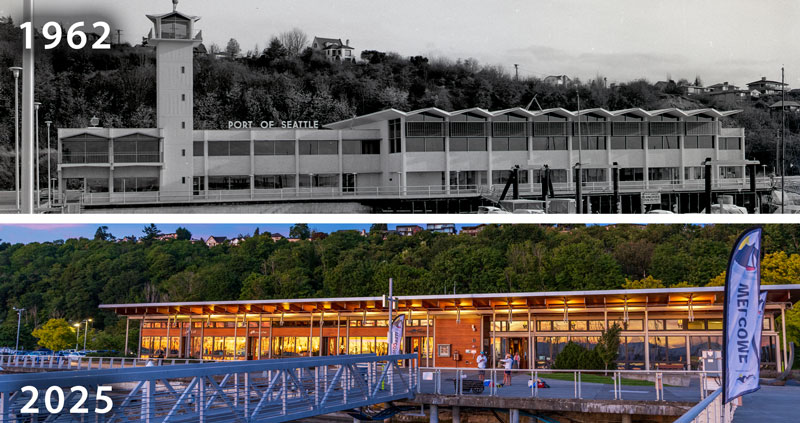
Shilshole Bay Marina
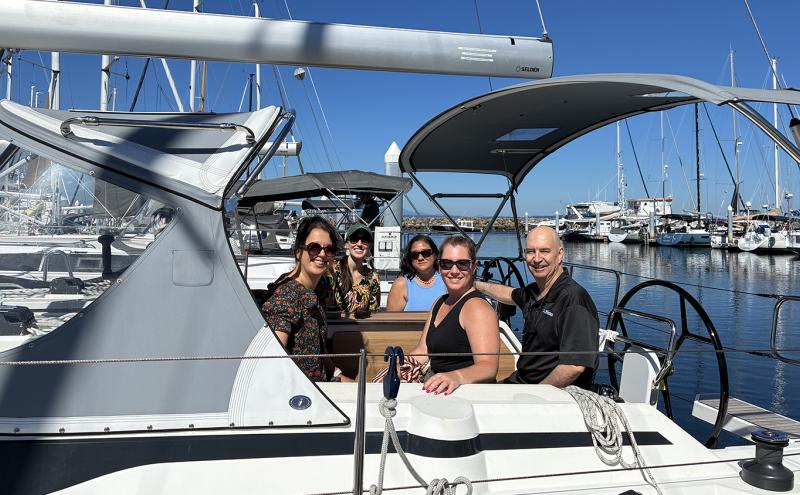
The facility opened in 1962, just in time for Seattle World’s Fair. Located north of the Ballard Locks and shielded by a 4,000-foot breakwater, Shilshole Bay Marina offers 1,400 wet slips for everything from small weekend boats to 250-foot superyachts. With 2,700 linear feet of guest moorage, it’s still the ultimate welcoming playground for visiting boaters.
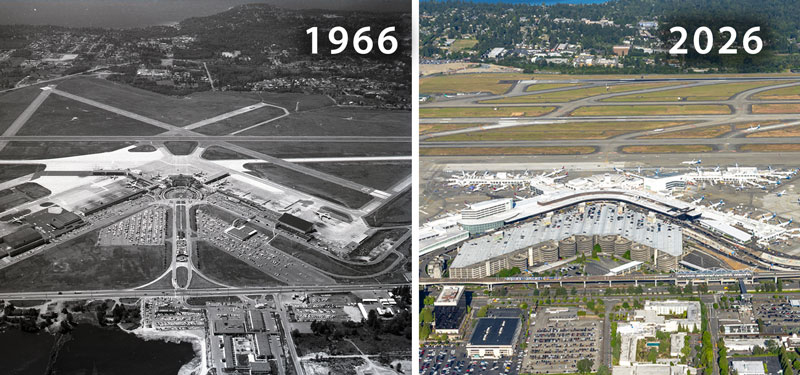
Seattle-Tacoma International Airport (SEA)
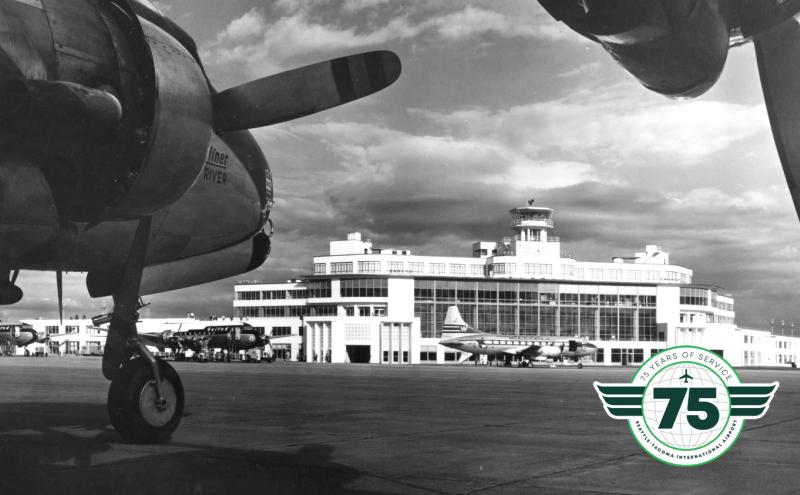
In 1942 the Port of Seattle took responsibility to build and operate a new regional airport as the federal government repurposed the existing airports in the region for World War II. The first flight took off on October 31, 1944, with passengers waiting in a repurposed Quonset hut, nicknamed “the boiler.” On July 9, 1949, the Port opened a modern, world class terminal to a crowd of 30,000. Since then, the airport has continued to meet growing regional demand with major recent facility upgrades and a vision for the future.
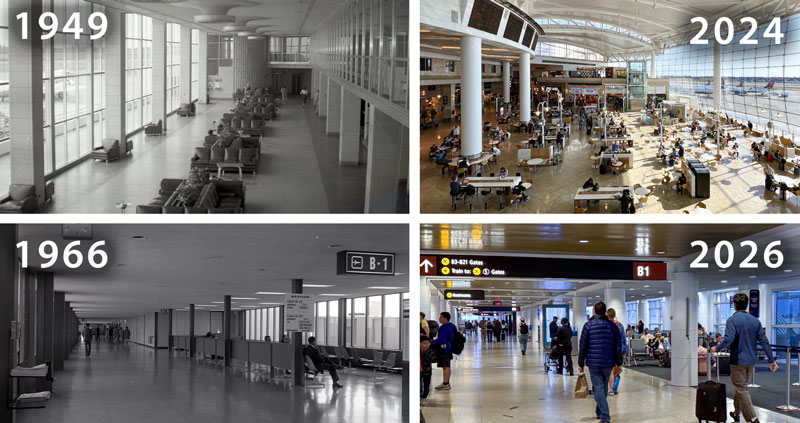
SEA Terminal and concourses
The Port has made upgrades to improve the passenger experience inside the terminal over the years as travel demand has increased, from 130,000 annual passengers in 1949 to 52.7 million passengers in 2025. SEA currently offers 63 international nonstop routes to 37 international destinations on 29 different airlines.
Looking forward
Over the years, the Port of Seattle has transformed from the 1911 wooden piers and the 1940’s Quonset huts into world-class terminals and a bustling global airport. But our core mission remains the same: our shoreline, our skies, and our industry should belong to the community. Today, as we continue to build out the "Port for the Future," we remain focused on improving traveler experiences, restoring vital marine habitats, and creating equitable economic opportunities that ripple across Washington and around the globe. Thank you for joining us on this journey — and here is to the next century of connecting our region to the world, together!
Subscribe to Connections for news and updates from the Port and SEA Airport