October 28, 2026
At the Port of Seattle, we believe in our collective ability to create a community where everyone – in all our beautiful diversity – is valued. As a significant economic driver in the region, we are positioned to lead our shared efforts in building an economy where people and the environment are healthy. Our ability to partner with and invest in small businesses, industry partners, community organizations, and communities near Port operations is critical to advancing economic opportunities and improving quality of life for all.
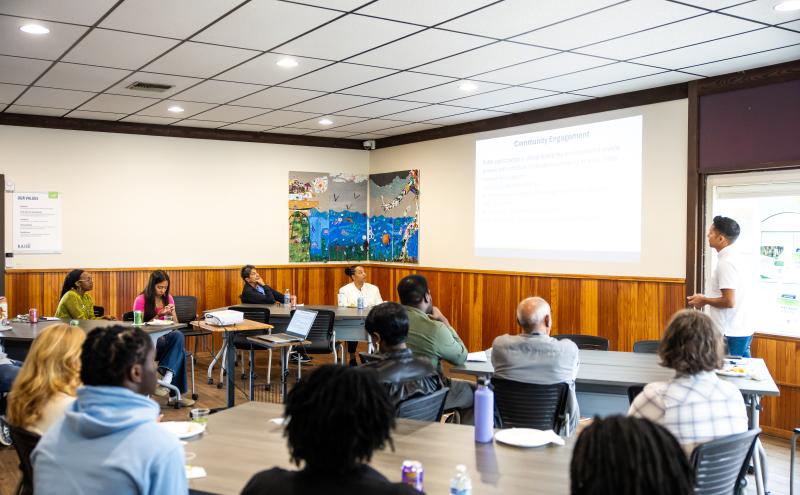
To that end, we hosted listening sessions in October to hear from you, our partners. The community sessions included 55 community members, nonprofits, small businesses, educators, and workforce partners, representing 46 local organizations, who met with Port staff, leadership, and Commissioners to share ideas on how we can improve our programs, policies, partnerships, and investments. Participants also learned about the Port’s economic and financial outlook, and learned how community-focused programs and investments fit into the Port’s budget. Check out the Community Listening Session presentation for more details.
In general, participants express deep concerns about rising social, economic, and environmental pressures, along with shrinking public and private funding, growing community need, and barriers to accessing Port resources. Based on the feedback from these listening sessions, we are developing a gap analysis to recommend improvements to our community investment programs. This report will be finalized and shared, and an Equity Summit will be held in Spring 2027. In the meantime, here’s a summary of the key takeaways and themes we heard.
Community Wellbeing and Emerging Pressures
Communities across all sessions reported heightened stress, instability, and fear, especially due to immigration enforcement, behavioral health needs, and economic uncertainty. Organizations face shrinking funding, particularly for climate, youth, and refugee programs.
Implication: Port investments must consider the broader context of community strain and the rising demand for wraparound support.
Environmental Health and Port-Related Impacts
Communities near Port operations emphasized significant concerns around air quality, ultrafine particles, noise, tree loss, climate change, and long-term health outcomes. Participants asked the Port to acknowledge environmental harms, moving beyond beautification efforts toward tangible health and mitigation strategies.
Implication: Environmental investments must be both restorative and community-driven, with more transparent Port accountability.
Workforce Pathways, Youth Engagement, and Employer Alignment
Training programs are not consistently connected to real jobs; employer follow-through is uneven, especially among Port tenants. Immigrant and refugee workers face language barriers, limited employer responsiveness, and culturally inaccessible hiring processes. Youth ages 18–24 need paid transitional opportunities, certification support, and career exposure, particularly in maritime careers.
Implications: Without stronger employer partnerships and clearer pipelines, workforce investments are not achieving full impact.
Small Business Support, Language Access, and Capacity Barriers
Small businesses, especially English-language learners, need ongoing bilingual technical assistance, hands-on help navigating state regulations, and pathways to Port contracting opportunities. Nonprofits and small businesses face capacity constraints, such as insufficient staffing, space, and flexible operating support. Benefits of Port programs are often not visible in communities of color due to communication gaps.
Implications: Community-facing entities require sustained, culturally responsive support to fully engage with Port opportunities.
Limitations in Current Port Funding Programs
Restrictions prevent funding for basic needs, which are critical barriers to participation in workforce and community programs. Alignment and RCW requirements force organizations to reshape programs to fit Port priorities rather than community needs. The lack of multi-year, flexible funding creates instability and a “funding cliff” for nonprofits.
Implications: A more flexible, equity-centered funding model is necessary for lasting community impact.
Need for Stronger Partnership, Communication, and Convening
Community partners want clearer communication about what the Port seeks to fund, what success looks like, and how decisions are made. Participants see value in the Port serving as a regional convener, bringing together employers, agencies, funders, and nonprofits to align goals.
Communities desire shared governance and a more transparent, participatory approach to investment decision-making.
Implications: Relationship-building is viewed as equally important as financial investment.
For those who attended these listening sessions, thank you for taking the time to join us. Your insight, honesty, and commitment to strengthening the communities we collectively serve are inspiring and valued.
We look forward to sharing the full report with you early next year. Together, a brighter future is possible!
Want to get these updates in your inbox? Subscribe to our Equity In Action newsletter, and you'll receive monthly updates from the Port's Office of Equity, Diversity, and Inclusion.