February 27, 2026
The Port wouldn’t be the place it is if it wasn’t for the leadership and collaboration of Black people and that is why we are excited to share another story of one of the many Black business owners that have positively impacted the Port! This Black History Month, the diversity in contracting team had the privilege of hearing from Karla Butler, owner of Dossier.
Background
Tell us a little bit about yourself, professional background, and what inspired you to start Dossier.
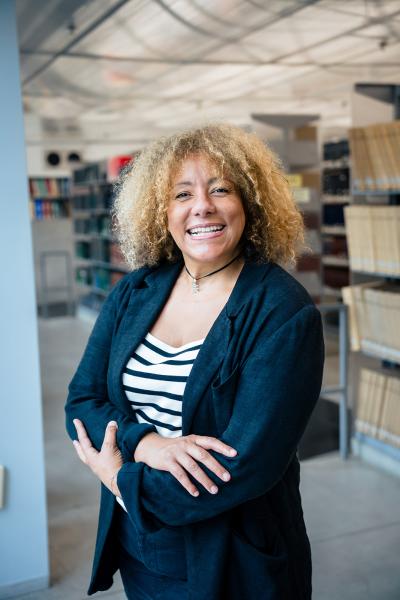
I was born and raised in London, England. From a young age, I was obsessed with reading, language, and literature. Those passions led me to study and work around Europe. I first earned a degree in English from South Bank University in London. My father was a French teacher, so I was always drawn to France; I eventually moved to Paris and received my diploma in French from the Sorbonne. Afterwards, I studied French Literature and Film Studies at L’Institut Catholique. After a brief return to London, I moved to Munich and landed a job teaching English to business students for a school called Linguarama, where my clients included Deutsche Telekom (T-Mobile) and an engineering firm called, Autoliv.
I later moved back to England and settled in Bristol raising two boys. It was motherhood that caused me to settle down but my love for literature never faded, so I became a librarian working in the British Empire and Commonwealth Museum where my primary role was archiving. Cataloging House of Commons Papers and original manuscripts from the Commonwealth gave me my first real introduction to document controls.
After relocating to Seattle in 2005, I temped at several architecture and engineering firms doing document controls. I was on assignment at an architectural firm, Callison, where I met an incredible woman named Catherine Blake who managed their archiving. She is also a Black woman and has been a huge inspiration and mentor to me. Through her, I became fascinated with the creativity of architectural and engineering design and felt truly at home doing archiving.
Later in my career, I joined Parsons Brinkerhoff, now known as WSP, at the perfect time! They were working on the Alaskan Way Viaduct and the office had a room full of documents from that project and other major projects, such as the the Downtown Seattle Transit Tunnel. I roughly archived 1500 boxes during my eight years there. It never felt daunting because I genuinely loved the work and was learning constantly. As I grew into my role, I became known as the person who knew everything about the company. My coworkers even created a sign for my desk that read, “Karla Butler, Mistress of Information. If Karla can’t find it, it doesn’t exist”. Parsons Brinckerhoff eventually hired me as a full-time consultant to file their documents for their WSDOT Tolling project, and Sound Transit’s D to M Street and East Link projects. Building filing systems and tracking documents for large infrastructure projects is what helped me establish a reputation beyond the company.
After leaving Parsons Brinckerhoff, I continued doing document controls for a smaller firm. Which eventually led me to deliver a document controls presentation for the American Council of Engineering Companies (ACEC). It clearly resonated because afterwards, many attendees expressed an interest in working with me, and I realized my skillset was in high demand. That was the moment I understood I had something special and that maybe I could run my own business around it. So, in 2022 I launched Dossier!
Can you tell us more about your company, and products/services you provide?
Dossier specializes solely in document control. We manage all information during the lifespan of a project. Editing documents, preparing them for client review, coordinating with the quality team, tracking the entire review process, and ensuring that comments are addressed and accepted by the client. If anyone needs access to a specific document, it's our job to locate and produce it. A major part of our work is also establishing a system for the entire project to follow, ensuring that there's a consistent record of where everything belongs. On a large project with over a thousand people involved without a standardized system, documents end up being filed differently by everyone and nothing can ever be found. Whether it's drawing revisions, change orders, submittals, permits, and contract agreements, our job is to make sure everything is on record and accessible.
The reason our work is so critical is because we ensure that all deliverables are documented, giving clients confidence that the agreed-upon work is being completed as promised. Our work is especially important on government contracts because we help provide transparency whenever there is a Public Disclosure Request (PDR).
Port Opportunities
What was your experience participating in the Port of Seattle Business Accelerator Mentorship Program 2024 cohort? What was it like having a mentor and how has it impacted your business?
The Accelerator was an absolute game changer. Being a first-time business owner is a lot like being a new parent or new pet owner. There is no instruction manual and you do most of your learning on the job. Nothing can really prepare you to run your own business. The Accelerator program confirmed I was running my business the right way, and I came out of the program thinking to myself, “I’ve got this”! It proved my hunches were right.
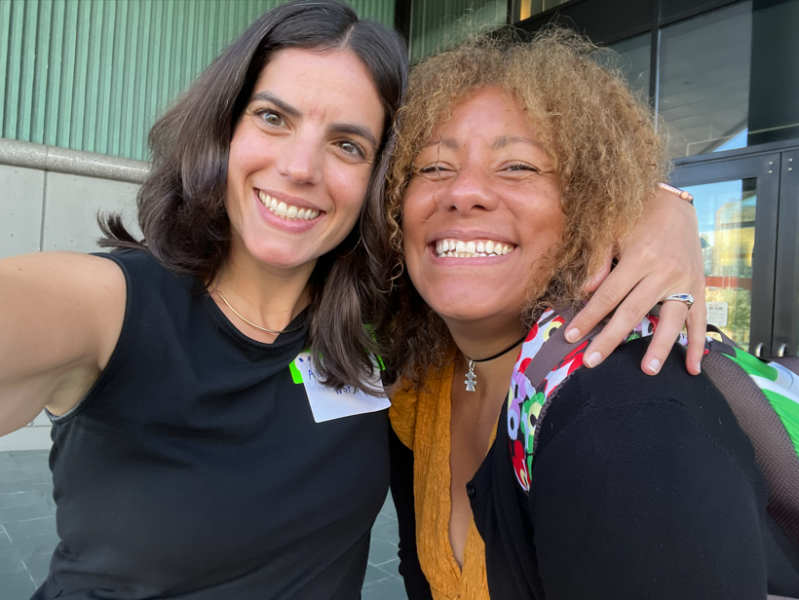
It was also wonderful to build bonds with the other cohort members. Sarah Hetzel from Big Mountain Electric became a close colleague; we exchanged advice, shared resources, and developed a great relationship which was common amongst those in the cohort. I was in a room filled with business owners who genuinely supported one another. I also loved learning from subject matter experts; one session on the legal side of running a business was particularly memorable. I also have to say, having Alison Tierney from WSP as my Accelerator mentor was a perfect match. She has been a true champion of Dossier and, to this day we still check in!
If it wasn't for the Accelerator, I wouldn't have had any idea that I should have a Statement of Qualifications. I learned how to market our work, increase our visibility, and while protecting both my employees and my business. When I entered the program, I had four employees. Now I have eight. That should tell you everything you need to know about how the program has benefited my business.
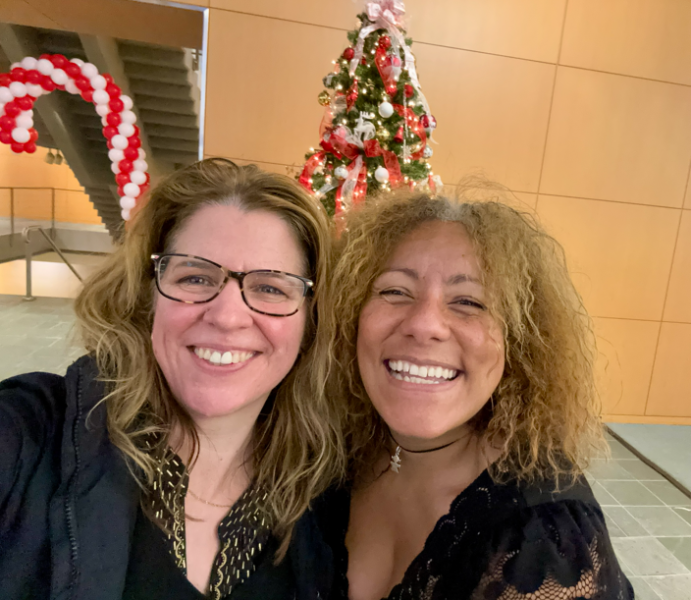
The Accelerator experience is something I wouldn’t have gotten if it wasn’t for my colleague Courtenay Hendricks. When I began growing Dossier, an aspect I always felt was missing was the business development side. To expand our operations, I hired her and she has been an absolute godsend! She would hunt down contracting opportunities for us, events we should attend, signed us up for numerous newsletters, wrote our quarterly newsletters, and she was the reason I found out about the Port’s Business Accelerator Mentorship program! Sometimes she would even attend sessions in my place if I was too busy. I trust her dearly and if it wasn’t for her, we wouldn’t be where we’re at as a business!
What projects have you worked on at the Port? What did it take to secure those projects?
We are on the Architectural Support Services IDIQ as a subcontractor to Gensler on a contract that was awarded in February of last year! Our relationship with Gensler started years prior when I first started Dossier, I joined their team as a document controller on a bid for a major Port project. Even though they didn’t win that contract, they remembered me and this one came along. IDIQs (Indefinite Delivery Indefinitely Quantity) aren’t the traditional contracts where you begin work right away so we haven’t started yet, but we’ll be ready when we’re called.
If it wasn’t for our previous relationship with Gensler, we wouldn’t be on this contract. Having a good relationship with design firms is how you get to team up. We attend many open houses, networking events, and contracting forums. We put a premium on building relationships. We are at the point now where we don’t have to reach out to primes when we see a contract come out because they reach out to us! It starts with showing up and getting your name out there, so these primes are aware of the work you do.
What do you wish you would have known before you began government work?
There are a handful of things I wish I would’ve known but I’ll give you three. First, organization is key. A significant amount of paperwork and documentation is required before work even begins on a contract and you have to stay on top of all of it; certificates of insurance, company information, small business certifications with the state and government entities. Thankfully, OMWBE holds workshops that helps businesses get organized.
Second, I wish I would’ve leaned more on other small business owners. Hearing about their experience can help you prepare for yours.
Lastly, I was already aware of this, but I must emphasize the importance of not overpromising. I’ve been asked to take on tasks, but I’ve had to be honest and explain that I’m at capacity. There are times when companies overpromise and underdeliver and those firms then have a blemish on their reputation as people who can’t do what they say they can.
Advice for Business Owners
What advice do you have for other WMBE/small businesses when it comes to finding opportunities and bidding for Port projects?
Get on as many rosters and mailing lists as possible; Port of Seattle, City of Seattle, WSDOT, King County and others. These lists keep you informed about upcoming events and contracting opportunities. Being certified through OMWBE also opens up additional notifications. Once again, having someone like Courtenay dedicated to attending events and building connections has been invaluable. Staying visible is how opportunities find you.
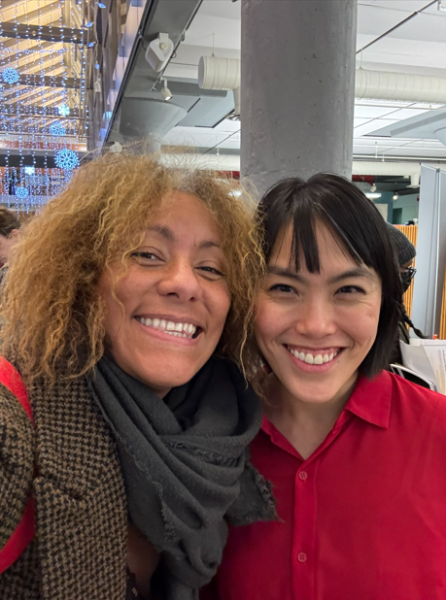
What advice do you have for other WMBE/small businesses who have just secured their first Port project and are about to begin work?
Make a strong first impression, because your reputation will follow you everywhere. If you want to team up on a contract as a subcontractor, do whatever it takes to do your best work when you get your opportunity. In this industry it’s important to be memorable. You want to be thought of whenever your line of work is mentioned, and you want to be mentioned when you’re not in the room. Being someone that’s easy to work with but also good at what you do is vital.
What I appreciate about the Port is that not only do I feel like I have a legitimate chance to get on a contract, but I also believe that if anything went wrong between my prime and us, we’d be able to get things rectified with the Port’s help. The Port really cares about its small business owners. I’m thankful I haven’t experienced a prime treating our firm unfairly, but you do see that across the industry, especially right now. It brings us small business owners a lot of peace of mind knowing the Port is looking out for us. That’s why it’s so important to do your best work for them. The Port is a great organization to have as a client.
Black History Month
What advice would you give to a Black entrepreneur looking to run a business?
Use your voice! As a half Caribbean, half English Black woman, I’ve had experiences where I felt invisible on teams I worked with. There have been contracts where the environment was not conducive to my expertise or input. My response has always been to convey my opinions clearly, eloquently and professionally. I’m sure being English helps too! For a long time, I didn’t feel empowered to speak up, worried that advocating for myself might be perceived negatively. But becoming a business owner gave me the confidence to stand up for myself and ensure my voice was heard.
As a Black woman, you can be made to be invisible, but it’s so important to stand up for yourself. In this industry, there is added pressure to excel because there are so few of us. Just remember that if you were hired for the job, it’s because you have the skillset to do it! Take pride in your work because when you’re the only one in those rooms, you may be representing all of us. I take pride in being a trailblazer because I want there to be less obstacles for the next Black entrepreneur. I want to improve the narrative around our people.
Why is Black History Month important to you?
Coming to America, made me far more aware of systemic oppression Black/African Americans have faced here. Back home, the most prominent form of oppression tends to be classism. Understanding the barriers Black people faced, and continue to face, in building wealth, while also seeing what Black people have accomplished despite all of it, is nothing short of inspiring!
What I love about Black History Month, is that it gives everyone the opportunity to learn about the tremendous achievements of Black inventors, civil rights leaders and pioneers. I find it deeply inspiring! Learning about the history of Black people in America gives me so much hope. I wouldn’t be where I was today if it wasn’t for all the Black people who fought on our behalf and I’m so grateful to have those opportunities that they fought so hard for, every day.
Karla’s entrepreneurial story is one that was decades in the making, and she is a prime example of how none of our experiences are ever a waste! We are excited to continue seeing her contributions both in and out of the Port! If you’re a small business owner on your journey of entrepreneurship, we would like to support your growth. Please sign up for our distribution list to see how Diversity in Contracting at the Port can be supporting you.