
Seattle is in a period of expanded global visibility and rapid regional growth, and our ability to welcome the world depends on strong, coordinated investments across our airport, seaport, and industrial lands. With international travel rising and global sports events on the horizon, Seattle-Tacoma International Airport (SEA) is planning for greater capacity in the future while modernizing its facilities today, so travelers experience a seamless, efficient gateway from the moment they arrive. At the same time, our deepwater port and working waterfront remain essential to the movement of goods and to the clean energy and maritime industries that anchor our regional economy.
That momentum extends through SODO and our broader industrial districts, where logistics, manufacturing, and maritime innovation converge. Protecting and strengthening these areas keeps freight moving, supports thousands of good jobs, and positions the region to lead in the next generation of sustainable maritime and aviation technologies. By planning ahead and investing across all our gateways, we can build the infrastructure, workforce, and clean energy systems that secure Seattle’s place as a global leader in trade, travel, and the maritime economy.
1. Download the State of the Port 2026 Annual Report
2. Watch the highlights of 2025
Port of Seattle Executive Director Steve Metruck
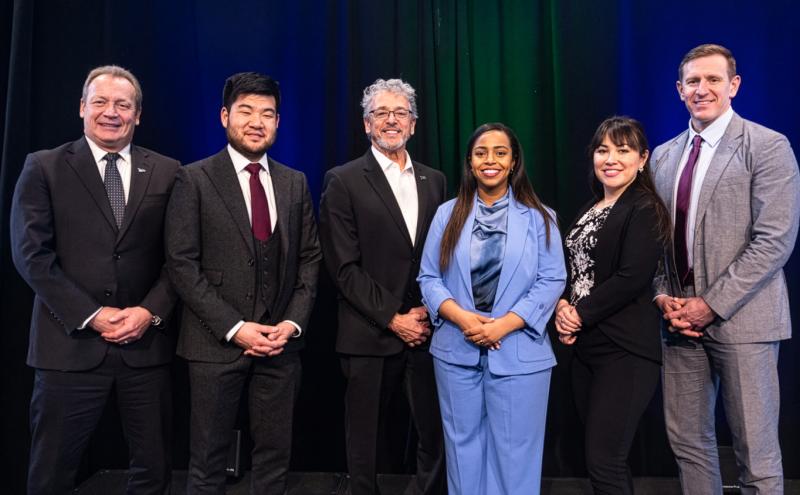
At this year’s State of the Port address at Pier 66, Executive Director Steve Metruck set the stage by grounding the Port’s work in partnership and shared responsibility. Speaking from the heart of the waterfront, he highlighted how the Port’s progress is shaped by collaboration with Tribal partners, local leaders, industry, labor, and community organizations. His remarks underscored the Port’s role as a regional connector — linking global gateways to local priorities — and emphasized the importance of working together to meet the region’s growing needs.
Looking ahead, Executive Metruck outlined a clear vision for the year to come, emphasizing modernization, sustainability, and readiness for major regional and global events. He described how the Port is preparing for increased demand, new technologies, and evolving economic opportunities, while remaining committed to equity and public service. The address framed the future as a collective endeavor — one that relies on innovation, careful planning, and strong partnerships across sectors.
Commissioner Toshiko Hasegawa
Commissioner Toshiko Hasegawa reflected on a year of progress driven by persistence and strong partnerships, emphasizing the Port’s responsibility to foster innovation, sustainability, and economic opportunity. She outlined achievements related to efforts such as the Teal New Deal, as well as new regional and statewide collaborations and actions to support key industries and protect workers amid global uncertainty.
Commissioner Hasegawa’s remarks highlighted steps to safeguard communities, strengthen public understanding of Port Police roles, restrict the use of Port properties for immigration detention, and expand workforce benefits at SEA through childcare access, transit support, and improved workplace resources. Grounded in a commitment to economic growth, Commissioner Hasegawa framed her focus this year as building a port that serves the next generation.
Commissioner Fred Felleman
Commissioner Fred Felleman reflected on the Port of Seattle’s long history as an anchor of the region’s economy and emphasized the importance of maintaining public awareness of maritime industries amid rapid regional growth. He underscored the Port’s dual responsibility to create jobs and protect the environment, noting that strong leadership and consistent stewardship have allowed both goals to advance together. Highlighting recent progress, from waterfront improvements and expanded shore power to the transition toward cleaner fuels, Commissioner Felleman pointed to the Port’s ongoing work to reduce impacts on communities near Port facilities while supporting a competitive, sustainable maritime sector.
Commissioner Sam Cho
Commissioner Sam Cho emphasized the Port’s expanding role in “subnational” diplomacy, the idea that regional partnerships can help advance key issues like climate action and maritime innovation even when national leadership is inconsistent. Commissioner Cho pointed to collaborations with Korean ports, West Coast partners, and Green Alaska Cruise Corridor efforts as examples of how the Port leads through cooperation. Looking ahead to global sports events, he noted SEA’s preparations to welcome a major influx of visitors, while underscoring the Port’s responsibility to safeguard vulnerable communities, including ongoing work to prevent human trafficking.
Commissioner Hamdi Mohamed
Commissioner Hamdi Mohamed outlined the Port’s responsibility to support historically disadvantaged communities, communities of color, and immigrant families who are most affected by Port and airport operations. She highlighted recent Commission actions to strengthen the Welcoming Port Policy, expand language access, and limit involvement in civil immigration enforcement to ensure Port facilities remain safe and inclusive gateways. Commissioner Mohamed’s remarks also underscored efforts to expand opportunity for workers — such as exploring broader healthcare access at SEA —and continued investment in community-led programs through the South King and Port Communities Fund.
Commission President Ryan Calkins
Commission President Ryan Calkins opened his remarks by noting the Port of Seattle’s significant impact relative to its size, pointing to key areas of progress in the blue economy, community engagement, and global leadership. He pointed to the Port’s role in convening international partners during One Ocean Week, advancing maritime education through Maritime High School, and elevating Seattle’s presence in global discussions at United Nations events. And he described how initiatives like Port Powerhouse help the Port shape international conversations around clean fuels, electrification, and innovation.
Addressing the global and domestic uncertainty facing trade and infrastructure, Calkins also affirmed that the Port remains stable, well prepared, and committed to serving as reliable critical infrastructure. Looking ahead, he outlined priorities that include strengthening the regional shipbuilding ecosystem, accelerating sustainable maritime fuel work, and expanding equitable workforce pathways.