March 16, 2026
The Port of Seattle is committed to becoming the greenest port in North America. Protecting trees, wetlands, and wildlife habitats is a key part of that commitment. The Port recognizes that trees play an important role in supporting healthy ecosystems, improving community well-being, and strengthening climate resilience.
In 2024, using its Land Stewardship Principles as a guide, the Port adopted new Tree Replacement Standards for Seattle-Tacoma International Airport (SEA), guiding how trees are protected, removed when necessary, and replaced across airport properties. These standards were created with community input and ensure the Port balances environmental stewardship with the operational safety and development needs at one of the nation’s busiest airports. The tree standards help the Port support healthy trees and forests while also ensuring safe operations in line with federal regulations.
Why trees matter
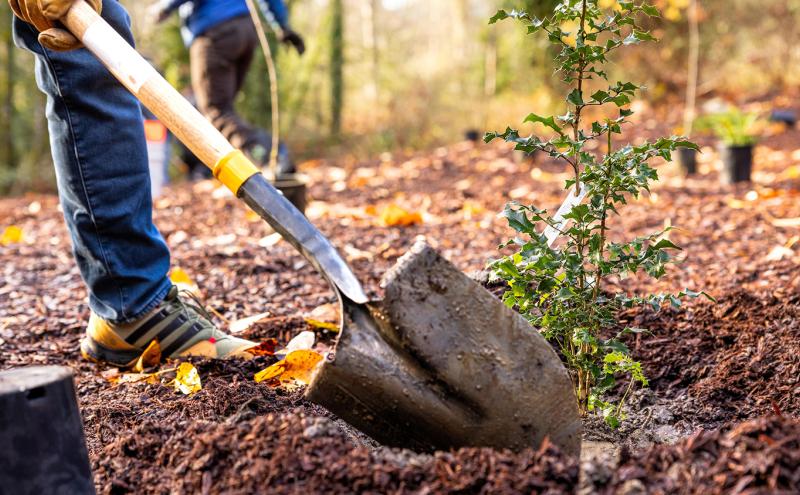
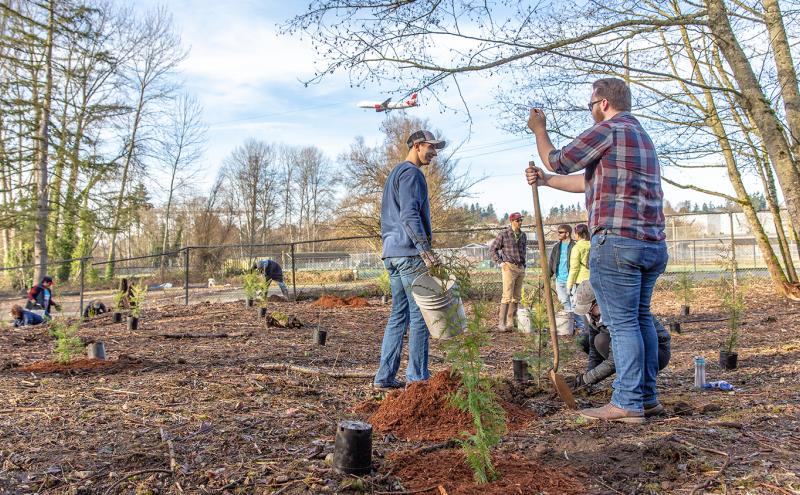
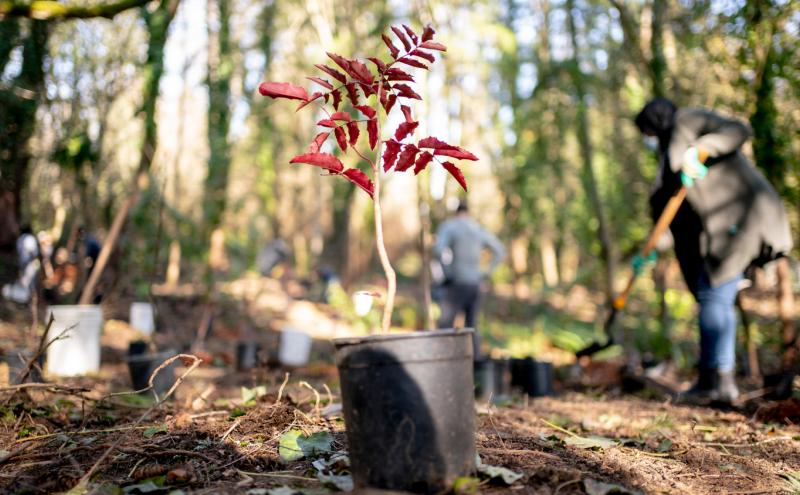
The Tree Replacement Standards are an extension of the Port’s commitment to habitat restoration on the 177 acres of wetlands and buffers around SEA airport and 60 acres of wetlands near Auburn. Since the Port began tracking restoration activities in 2006, more than 446,000 trees and shrubs have been planted and more than 215 acres of forest and other habitat have been restored, including extensive and ongoing invasive species control.
Mature trees offer significant environmental and community benefits — from improving air quality and managing stormwater to supporting wildlife habitat and reducing urban heat. Because of these benefits, the Port prioritizes retaining existing trees whenever possible. Under the standards, trees are only removed when necessary to meet safety requirements, federal aviation regulations, or essential development needs. The Port takes a holistic approach to replacing trees that goes beyond just planting replacement trees and focuses on restoring healthy forests and habitat overall.
Key priorities are to:
- Replace trees in locations with the greatest community benefit
- Maximize canopy potential on development sites and forest health in green spaces by removing invasive vegetation
- Protect existing tree canopy threatened by invasive vegetation
- Plant trees and shrubs to restore a native forest community
How the tree replacement standards work
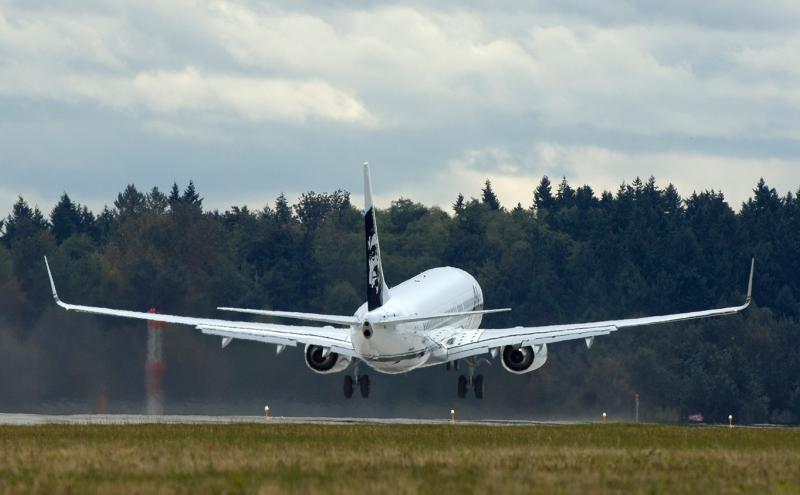
Sometimes, a tree must be removed to comply with Federal Aviation Administration (FAA) standards for aviation safety. This could be because a tree is obstructing aircraft takeoffs and landings. Trees may also be removed to make way for essential development. Under the standards, a tree qualifies for replacement if it is:
- At least six inches in diameter, or
- Planted as part of landscaping for existing development
When a qualifying tree must be removed, it must be replaced at a 4:1 ratio, designed to promote forest health. The policy requires four actions to compensate for every tree removed.
Actions include:
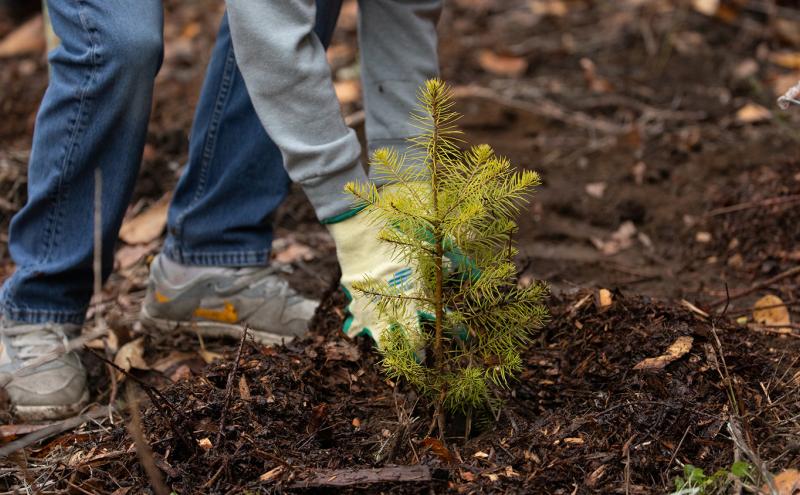
- Planting one tree
- Removing 200 square feet of invasive species and planting a native understory
- Protecting one tree:
- Protecting an existing high value tree (over 30 cm diameter or ecologically important) from ivy mortality in off-site ecological areas, or
- Retaining an existing tree on the project site
At least 50% of the credits must come from tree planting. The standards apply to SEA Airport property that is not within a city jurisdiction. Trees cleared within a city jurisdiction are subject to tree replacement standards in the city’s municipal code. In addition to tree clearing standards, SEA meets or exceeds all city, state, and federal environmental regulations.
Data-driven stewardship
To support implementation of the standards, Port staff maintains a comprehensive tree inventory that maps land use, forest cover, high-value tree locations, as well as planning data that supports land stewardship decision-making. Staff also document the location and extent of tree clearing and replacement actions. Sites are prioritized for restoration depending on the anticipated level of ecological and community benefits.
Tree replacement communications
To ensure transparency and accountability, Port staff reports tree replacement and retention actions the following ways:
- Annual report to Port of Seattle Commission
- Inclusion in the Port Environmental and Sustainability department’s annual report
- Report to the community at the Highline Forum
Find more Land Stewardship information and updates.
Embedding in project review
In 2025 the Port introduced a formal review process for Port projects with potential tree clearing. Projects proposing tree removal must undergo design review through the Port’s Landscape Committee. Larger projects may also involve coordination with the City of SeaTac.
When evaluating projects, the Port follows a clear hierarchy in dealing with tree impacts:
- Retain existing trees whenever possible
- Replace trees on site
- Replace trees nearby
- Replace trees off site when no other option exists
2025 highlights
In 2025 in accordance with the Tree Replacement Standards, SEA cleared 69 trees and generated 276 replacements credits, planting 202 trees, restoring approximately one quarter of an acre of invasive understory, and protecting nine high-value trees. High-value trees are protected by retaining a tree on the development site or protecting a high-value tree canopy from ivy in ecological areas.
Looking ahead: 2026 and beyond
The Port has added resources to support future tree retention and replacement work, including:
- Continuing to work with the Washington Conservation Corps and increasing crew hours
- Adding maintenance staff capacity
- Increasing funding for construction activities such as broad-scale site clearing and soil amendment.
Tree retention and replacement work applies to the Flight Corridor Management Program 2024. Federal Aviation Administration regulations require the removal of any obstructions from airspace to ensure that planes can fly safely. Restoration efforts associated with this project will begin in 2026 and continue through mid-2027. This program is set to remove 153 trees and generate at least 612 tree replacement credits. Tree planting is scheduled to comprise 334 of the credits, with 234 credits generated through protection of existing tree canopy and invasive understory restoration.
Subscribe to Evergreen for environmental updates from the Port of Seattle and SEA Airport