
April 14, 2026
Trying to minimize your carbon footprint on your upcoming trip? The good news is that Seattle-Tacoma International Airport (SEA) wants to help make your journey on the ground and in the air as sustainable as possible. The airport takes actions everyday to reduce emissions and waste, ensure energy efficient operations, and build sustainable infrastructure, helping meet our goal to be the greenest airport in North America. But we can’t do it alone.
The theme of Earth Day 2026 is “Our Power. Our Planet.” Environmental progress isn’t driven by a single administration or election. It’s sustained by daily actions of communities, educators, workers, and families protecting where they live and work.
Here are steps you can take to make your journey through SEA as sustainable as possible.
Reduce waste at security checkpoints
It’s always a good idea to check online before you pack for your big trip to avoid bringing restricted items through security checkpoints that may end up in the trash. But if you do end up with something you can’t fly with, there’s now another option. Through Donation Drop @ SEA, if your lightly used or unopened shampoo, conditioner, and other personal hygiene products don’t meet TSA security requirements, they don’t have to go to waste. Items are placed in donation crates instead of trash bins and sent to the Des Moines Food Bank to support the local community in need. Donation Drop @ SEA is available at all TSA Checkpoints. Find the one closest to you on the interactive map.
Take public transportation or a rideshare
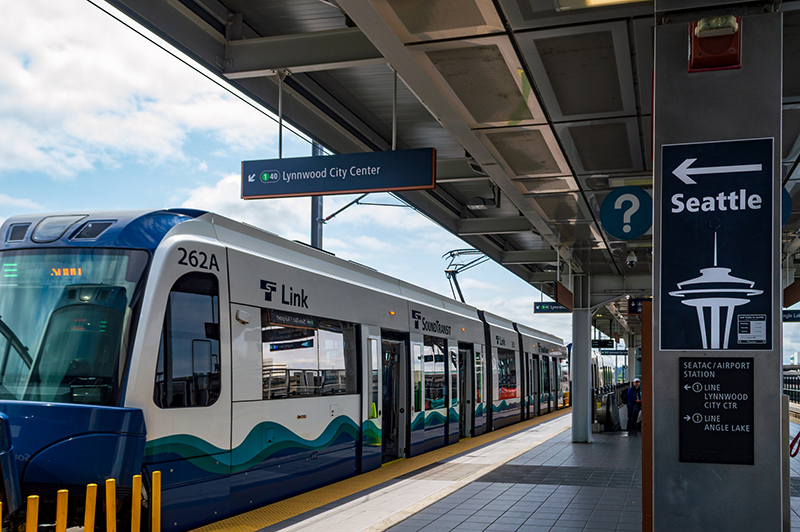
Make your trip to and from SEA a little greener. Link Light Rail provides reliable service to downtown Seattle in about 40 minutes, and there is space for luggage storage and a couple of bikes in every car. And with new stops open as far as Lynnwood to the north, Federal Way to the south, and downtown Redmond to the east, light rail is now connected to more communities than ever. Check to see which light rail station is closest to you with Sound Transit's trip planner.
Or share your ride with other travelers by carpooling with friends and family who are also traveling, or using a taxi, app-based ridesharing service, or airport shuttle service.
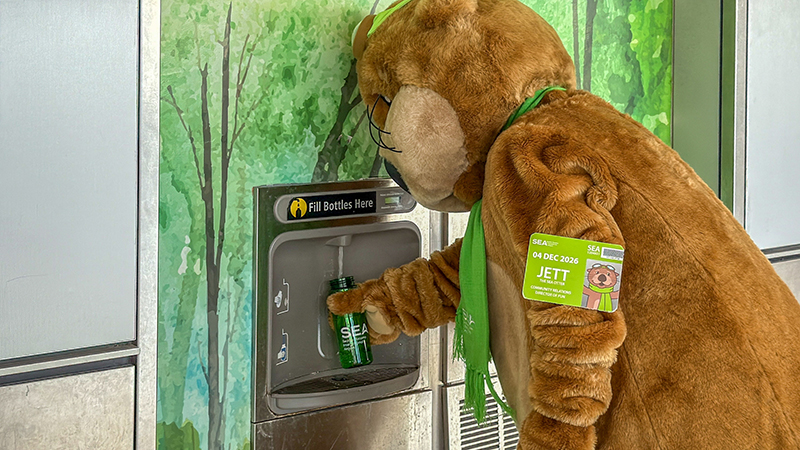
Bring a refillable water bottle
Bringing your own water bottle is a great way to cut back on single use containers while you stay hydrated. Here are a few tips for making it work for you at SEA:
- Pour out liquids before going through security and fill your water bottle afterwards at one of SEA's many water refill stations
- Use the beverage drain stations at security checkpoints to empty your drink bottles
- Download the flySEA App and search for “water refill station” on the interactive map to find the one closest to you
- Refill your water bottle before your flight to ensure you stay hydrated and avoid single use containers in the air
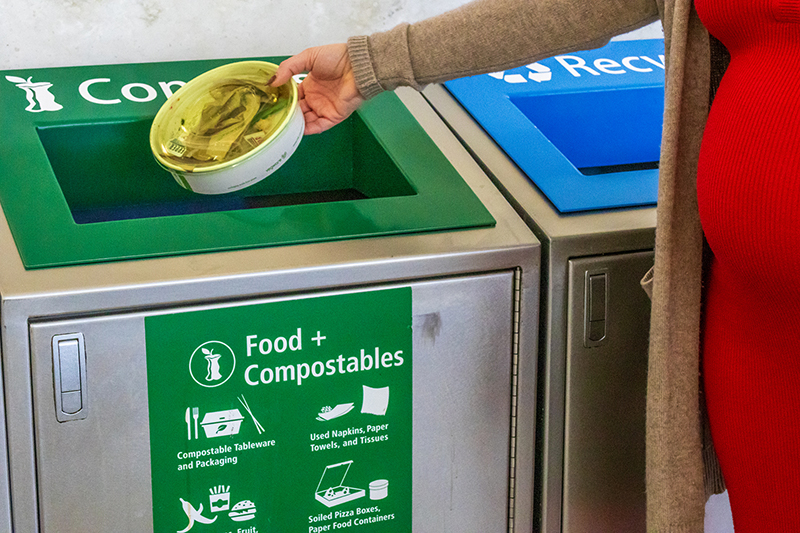
Recycle and compost
Did you know that nearly half of the trash generated at the airport is kept out of the landfill through SEA Airport’s waste reduction program? SEA now requires airport restaurants and shops to use reusable dishes and compostable to-go packaging, significantly reducing single use plastics. Look for recycling and composting bins located throughout the terminal!
And knowing which bin to toss your to-go box in is easier than ever. Oscar AI-enabled waste sorting stations located in the Central Terminal, North Concourse, South Concourse, and C Concourse will give you the answer you need. Hint: It goes in the compost!
Offset your flight’s carbon emissions
We all need to travel sometimes, but there are ways to lessen the environmental impact. Consider removing or offsetting your flight's carbon emissions through programs offered by airlines or dedicated organizations.
Some airlines, like Alaska Airlines, let you add Sustainable Aviation Fuel (SAF) credits when you purchase your tickets. This helps airlines buy increased volumes of SAF for flights on their routes. Many more airlines have SAF agreements for corporate travelers, so if you fly frequently for work, consider asking your company to enroll.
Alternatively, SEA partners with The Good Traveler program to offer carbon offset options for any flight. The funds from these offsets support projects that help restore climate balance. These projects might include planting vegetation to capture carbon, generating clean wind energy, or capturing methane from landfills.
Many employers, including the Port of Seattle, already offset their business air travel annually. Talk to your employer about the possibility of offsetting employee business travel.
Pro tip: Fly nonstop if you have a choice. The largest sources of airplane emissions are takeoff, landing, and taxiing so getting to where you are going more quickly and efficiently helps both you and the earth.
Learn how SEA is taking steps to make travel more sustainable:
Subscribe to Evergreen for sustainability news from SEA Airport