
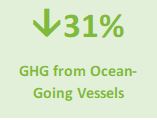
 Greenhouse Gas emissions from all types of seaport-related oceangoing vessels in the Seattle harbor, including cruise and grain ships that call at the Port of Seattle and marine cargo ships that call at Northwest Seaport Alliance terminals, decreased 31 percent between 2005 and 2016.
Diesel particulate matter emissions have decreased 88 percent over the same period.
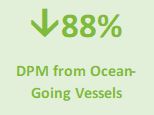 The decrease in emissions results from a combination of factors. Port activity declined from 2005 to 2016, with 28 percent fewer vessel movements. The decline in diesel particulate matter emissions is largely the result of new regulation. The North American Emissions Control Area, introduced in 2015, requires vessels to use cleaner diesel fuel or equivalent technology. Increasing numbers of shore-power equipped ships and increasing use of shore power while at berth where connections are available has also helped reduce emissions, and its use continues to avoid greenhouse gas and diesel emissions today.
The Port does not have cruise ship-specific emissions data for the 2005 baseline year, so cannot speak to a cruise-specific trend.
The Port of Seattle is acutely aware of the far-reaching impacts that climate change is having on the region today and is planning for the future. As part of its ambitious Century Agenda, the Port set a long-range commitment to reduce greenhouse gas emissions
- by 50 percent by 2030
- Net zero or better by 2040 for port-controlled or indirect emissions
- and to be carbon neutral or better by 2050 for port-influences emissions
From investing in renewable natural gas at Seattle-Tacoma International Airport (SEA) to using shore power to reduce emissions from cruise ships at berth, the Port is working to fulfill its responsibility to address climate change.