January 28, 2026
By Delaney Cyphers, Environment and Sustainability
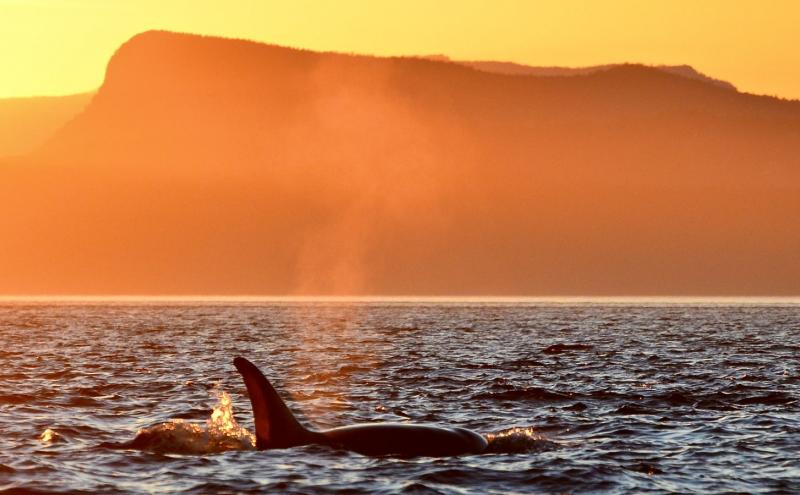
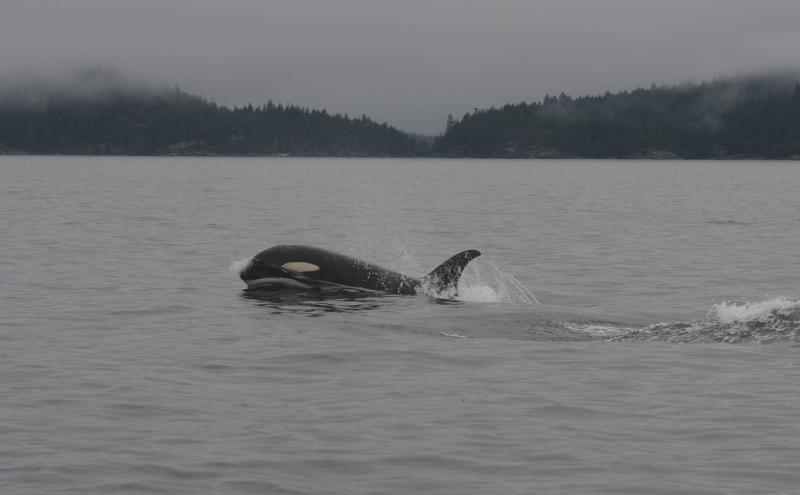
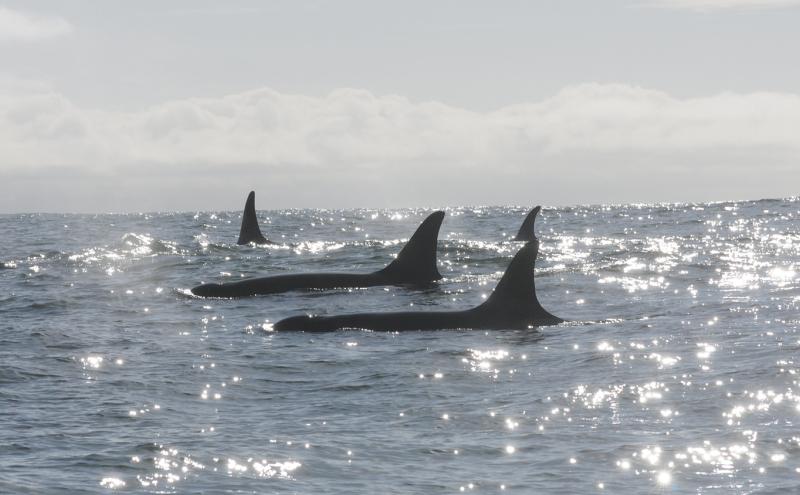
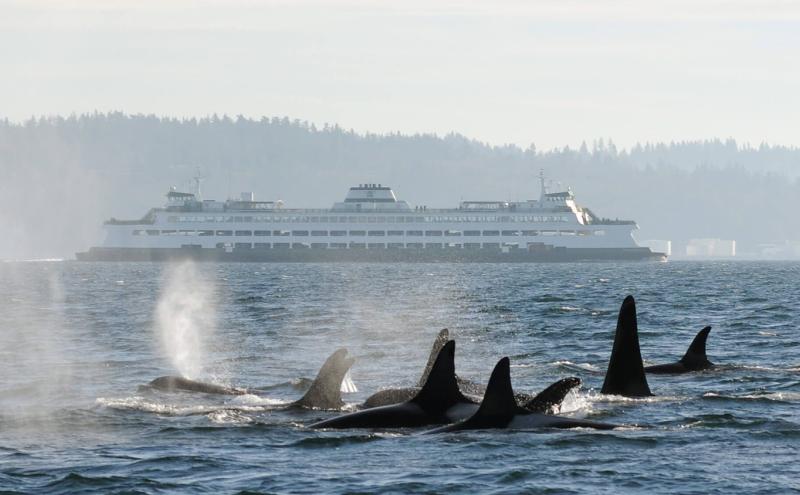
Have you ever tried to have a conversation in a crowded room? It can be difficult! This is what life can be like for the Southern Resident killer whales in the Puget Sound. Underwater noise can harm marine life in a variety of ways, so understanding noise sources is very important. Any marine animal that relies on echolocation for survival will have trouble in a noisy environment. Underwater noise impacts animals’ ability to feed, communicate, navigate, reproduce, and avoid danger. In 2018, the Governor's Southern Resident Killer Whale Task Force named underwater noise as one of the top three threats to the Southern Resident killer whales.
Underwater noise comes from many sources, including natural events like waves and storms, but the Port of Seattle is focused on impacts from vessel operations and in-water construction, where action and mitigation are possible.
Underwater Noise Mitigation and Management Plan
In 2022, the Port published its first Underwater Noise Mitigation and Management Plan (UNMMP). The plan is part of the Port’s Green Marine Certification, and follows Green Marine’s underwater noise environmental indicator framework. The UNMMP makes recommendations for in-water construction best management practices (BMPs), science and research, policy advocacy, and education and outreach. The plan sets the Port of Seattle apart from many other U.S. seaports and is the first step in making our shared waters quieter for all.
Since the plan’s publication, Port staff across departments have taken meaningful steps to reduce underwater noise and protect marine life, including:
- Launching the Elliott Bay Underwater Noise Assessment Program (UNAP). This two-year noise monitoring program was developed to better understand baseline noise levels in Elliott Bay
- Adding shore power at Pier 66. While the primary goal is to reduce greenhouse gas emissions, shore power has the added benefit of reducing noise with fewer ship engines idling in Elliott Bay
- Using innovative technologies for in-water construction. Bubble curtains can reduce noise from pile driving activities by preventing noise from traveling underwater through air bubbles
- Partnering with the Seattle Aquarium. Check out the underwater noise exhibit on the second floor of the new Ocean Pavilion to learn more!
- Partnering with Quiet Sound. The non-profit organization has a mission to reduce underwater noise impacts to Southern Resident killer whales from large commercial vessels, and has implemented a voluntary vessel slowdown through some of the orcas’ critical habitat. When ships go slower it reduces noise
Implementation of the UNMMP is ongoing. Meanwhile, the Port is updating the original plan to include new best practices and noise reduction strategies. The Port will continue to update this plan at regular intervals to include best available science.
How you can help
Want to learn more? The Port has launched a webpage dedicated to underwater noise and its impacts. Visit the page and check back for updates, resources, and opportunities to get involved.
Do you have a boat and want to learn how it affects the underwater soundscape? Join the Sonic Signature Study, hosted by the Port of Seattle this summer! During the event, participants will motor past a hydrophone (an underwater recording device) and receive real-time noise data from their boat. The underwater noise webpage will be updated later with more event details and registration information.
While you’re on the water, here’s how you can help minimize impacts on marine life.
- Respect boating guidelines to protect orcas. While you are on the water, stay at least 1,000 yards from the Southern Resident killer whales and try to move out of their path at a low speed
- Slow down when you can, even if you don’t see any animals nearby. Speed and noise levels are directly linked. Going slower means your boat will be quieter
- Keep educating yourself and your community about the impacts of underwater noise!
Underwater noise is here to stay, but the Port is doing its part to quiet our shared waterways and protect sensitive species. By keeping up to date with the current science and educating Port tenants, customers, and the public, we can lessen the effects on some of our region’s most beloved species.
Subscribe to Evergreen for environmental updates from the Port of Seattle and SEA Airport
*Image credit: NOAA Fisheries