
July 28, 2026
Written in 2020; updated in 2026
Did you know that nearly one in four adults in Washington state have some type of disability, whether it’s hearing, vision, cognitive, or ambulatory? Seattle-Tacoma International Airport (SEA) is committed to making travel welcoming, safe, and comfortable for everyone. This includes improving facilities, programs, and services that elevate travelers’ experience.
July 26 marks the anniversary of the passage of the Americans with Disabilities Act (ADA), a landmark law that prohibits discrimination based on disability. The ADA protects individuals with physical and mental disabilities, helping ensure that people with disabilities can fully participate in our community, which strengthens our community as a whole. At SEA, we evaluate each project or initiative through an accessibility lens to ensure all travelers benefit as our operations, customer experience, and facilities continue to evolve.
In honor of the ADA Anniversary, here are five accessibility highlights at SEA that will make travel easier for all of us:
1. Getting to SEA
Whether you’re driving, taking transit, or arriving by shuttle, SEA offers accessible options to help you get to the terminal smoothly.
Pickups and drop offs
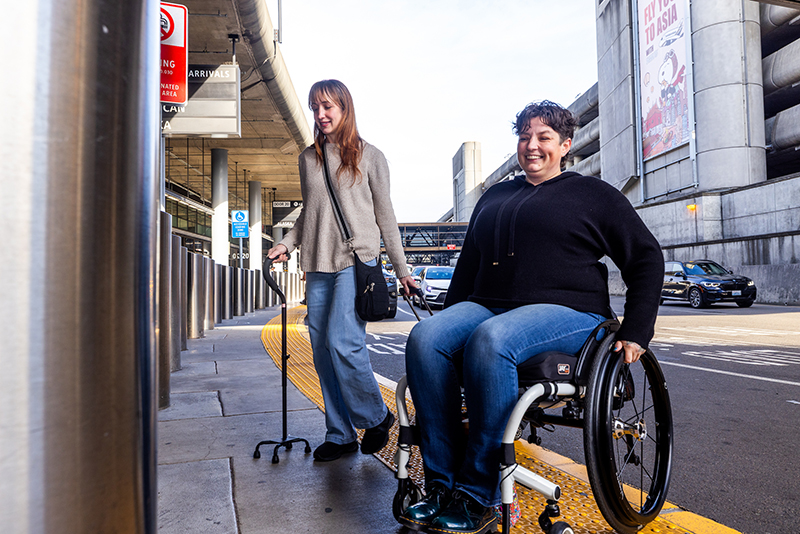
Accessible loading zones are available at least every 100 feet on Arrivals and Departures drives. The entire Arrivals Drive is accessible with a ‘zero curb’ and all exit ramps have been remodeled to an ADA-compliant slope.
Learn about curbside accessibility features
Arriving by hotel shuttle? Have your driver contact the Ground Transportation booth ahead of time for curbside drop off. The same is true for pickup by shuttle, cab or ride share. You can pre-arrange with your driver to be picked up on the Arrivals Drive if you have a disability that limits mobility.
Parking
Parking in the SEA garage? ADA-designated parking stalls are available in General Parking on Floor 5 (surrounding each of the elevator lobbies), and on Floor 1, 3, and 7. Additional ADA parking stalls are located on Floor 4 through the SEA Reserve program.
Pro tip: Call Prospect Airport Services at (206) 246-1550 for free wheelchair assistance from the curb, garage, or train station to your ticket counter. From there your airline can take you through security and on to your gate; check in with your airline on wheelchair service before coming to the airport.
Learn about accessible parking at SEA
2. Sunflower lanyards and sensory rooms
Sunflower lanyards
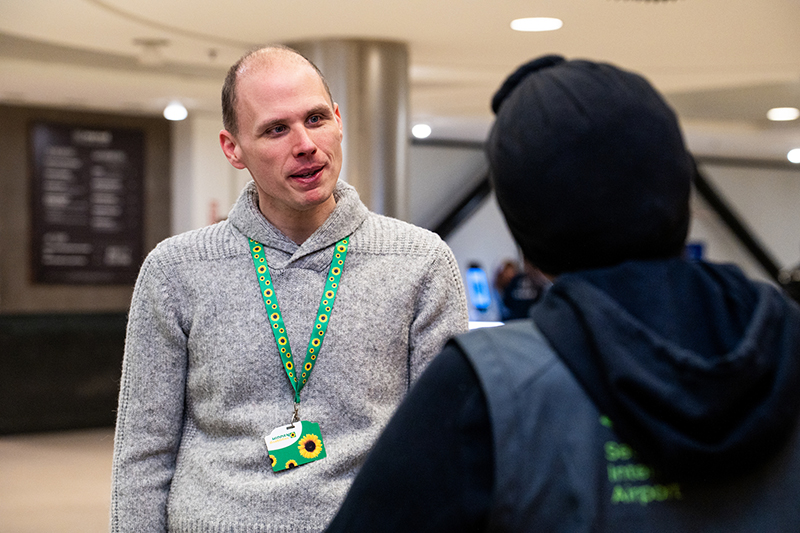
In 2019, SEA became the first U.S. airport to offer sunflower lanyards to travelers with non-apparent disabilities, such as autism, PTSD, or hearing loss. Pick up a sunflower lanyard to discreetly signal to staff that extra assistance, patience, or understanding may be needed. SEA has distributed thousands of lanyards since the start of the program in October 2019.
Free sunflower lanyards are available at two pre-security information desks between Checkpoint 4 and Checkpoint 5 and on the Baggage Claim level near Checkpoint 1, as well as at the post-security information desk in Concourse A (near gate A5). This desk is staffed from 7 a.m. to 9 p.m. seven days a week. If you are travelling outside of these hours, checkpoint staff can assist with locating a lanyard.
Cognitive and memory support
SEA partners with the Alzheimer’s Association to support travelers and provide resources for staff. Recently all SEA Transportation Security Administration (TSA) officers received training on best practices for interacting with travelers experiencing Alzheimer’s or dementia-related symptoms.
Learn how to help support these travelers
Sensory rooms
SEA Airport opened its first sensory room in 2021 near the A Concourse train station, and a second is now open on the third floor of the C Concourse Expansion. The rooms are designed to address the needs of travelers with autism, sensory processing disorders, or those who need a calming recovery space from the sights and sounds of the airport. Sensory rooms feature special lighting, furniture, and materials to help people prepare to travel or recover from their journey.
3. Friendly facilities for furry helpers
ADA protections also apply to service animals assisting people with disabilities. Use these resources to make sure you and your four-legged friend show up prepared and avoid a ruff travel day.
Traveling with Pets and Service Animals Can Be a “Paws-itive” Experience
Pet relief areas
SEA Airport has nine pet relief areas, both inside and outside of security. We are committed to ensuring service animals have a clean relief space just like all other travelers.
For full details on these locations, download the Fly SEA app or visit the travelling with pets page.
Animal therapy program
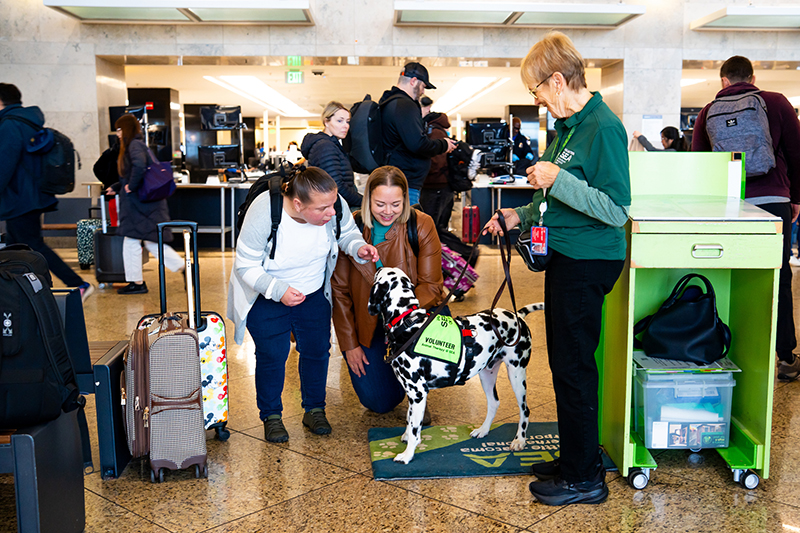
The SEA Pups animal therapy program was created to bring more calm and joy in a busy, and sometimes stressful airport setting, through a wagging tail and a furry friend. Our animal therapy teams are registered through Pet Partners and Reading with Rover.
Meet Lynn and Tuck, one of our animal therapy teams
4. Vision and auditory assistance
Aira service
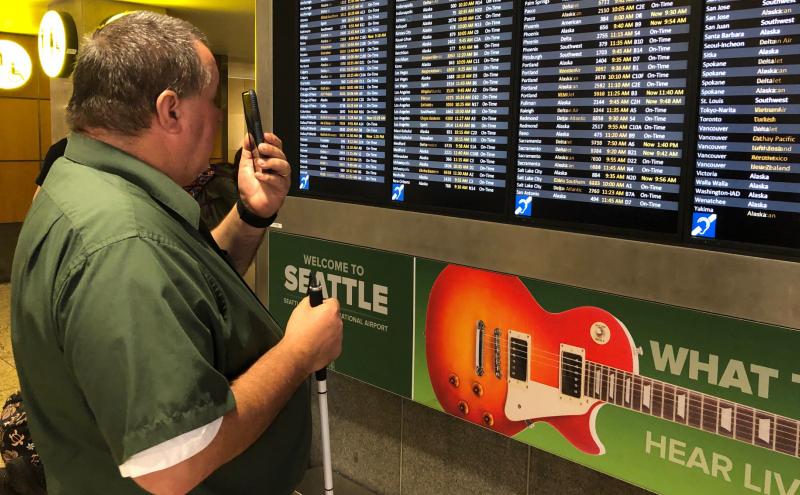
Since 2018, we have partnered with Aira (pronounced EYE-rah) to help travelers who are blind and have low vision safely navigate the airport. Aira connects users to live agents through a mobile app and/or assistive smart glasses to navigate every step of the airport, from the curb and check-in area all the way to the gate.
SEA was the first airport on the West Coast and one of the first airports in the nation to join the Aira Airport Network and covers the cost of the Aira minutes for any travelers using the service while in the airport. Connect to SEA free Wi-fi and turn on location services to connect to an interpreter.
Learn more about Aira at SEA Airport
Mobile VRI
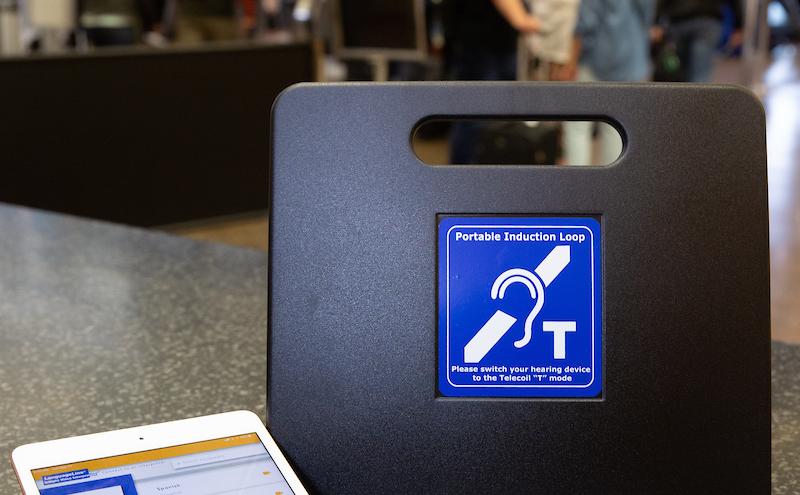
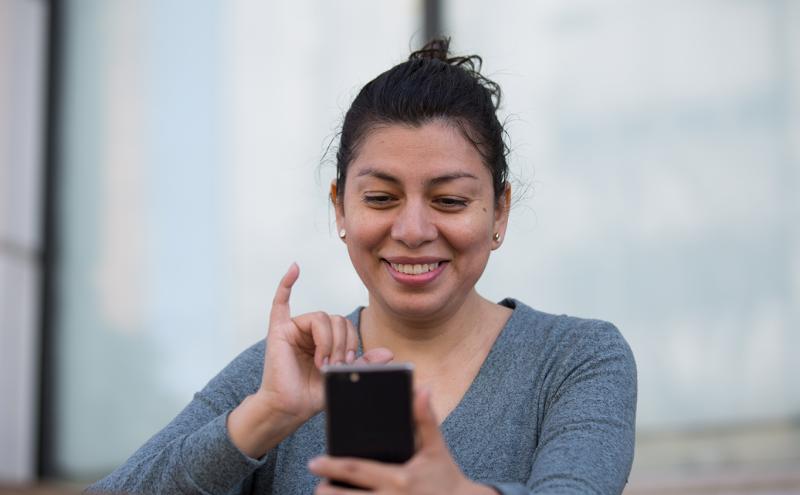
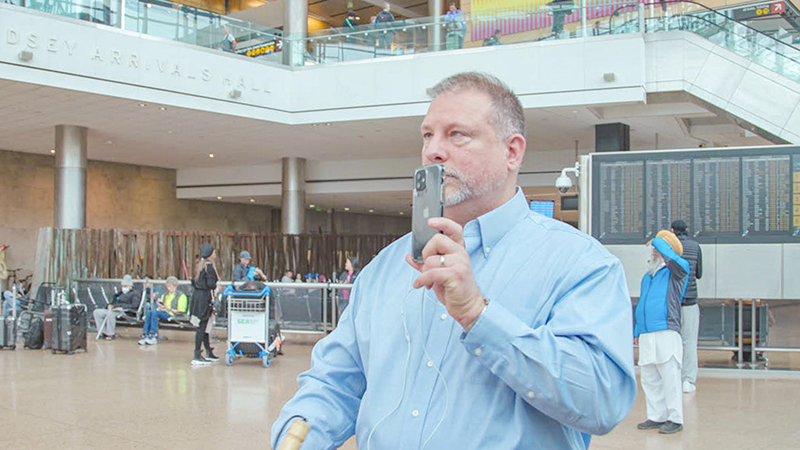
Navigating a busy, unfamiliar airport can be stressful for anyone, especially if communication is a challenge. In moments like these, immediate access to a qualified American Sign Language (ASL) interpreter can make all the difference. To help meet these urgent communication needs, SEA now offers Mobile Video Remote Interpreting (VRI). The free service allows travelers who are Deaf and hard of hearing to connect to a live ASL interpreter using their own smartphone or mobile device once connected to SEA free Wi-fi with location services enabled.
Learn how to connect with Mobile VRI at SEA
Language assistance
Our Pathfinder customer service team (dressed in green and located throughout the terminal) is a great resource for travelers with hearing loss or who do not speak English. Pathfinders carry interpreting devices and tablets equipped with the Language Line app that provides live translation for over 100 languages including American Sign Language (ASL).
Communication cards
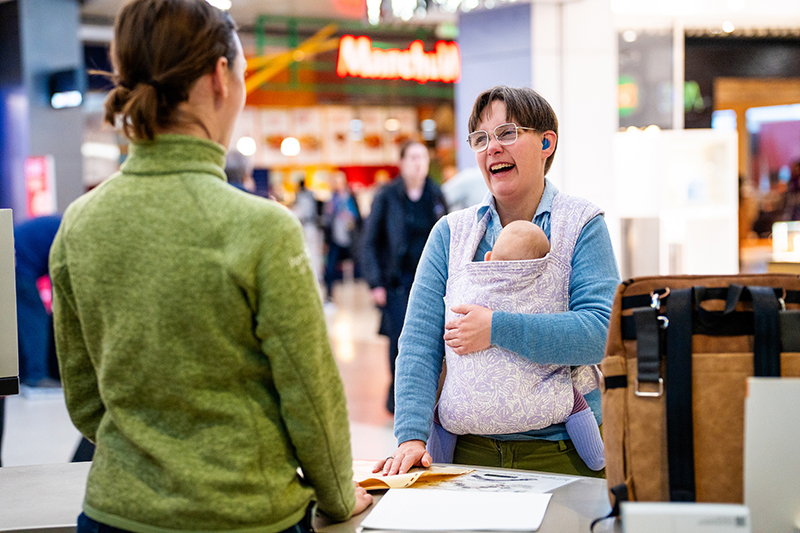
Communication cards help travelers who are Deaf, hard of hearing, neurodiverse, nonverbal, or speak another language communicate more easily with airport staff, especially during security and customs screening. It is also a way to support travelers when technology isn’t an option.
Pro tip: Many SEA restaurants and shops are also equipped to help with language translation and communication assistance using translators, cards, and other training. Don’t hesitate to ask employees at the individual shops or SEA Pathfinders in green for more information.
Learn more:
Bridging Communication Gaps at SEA
Apps for accessibility
Several apps, paired with a cell phone text reader, can help travelers who are blind or low vision do advance research, order, and pick up meals at airport restaurants. You can read or listen to the menu on your cell phone, pay, and place an order using technology.
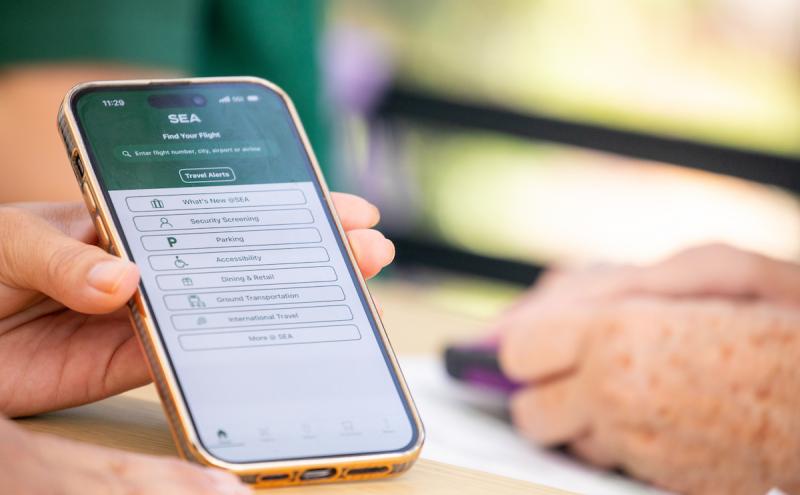
Pro tip: The FlySEA app is screen reader compatible for blind/low vision travelers. It also allows you to select an accessible route through the terminal.
5. Accessible restrooms and amenities
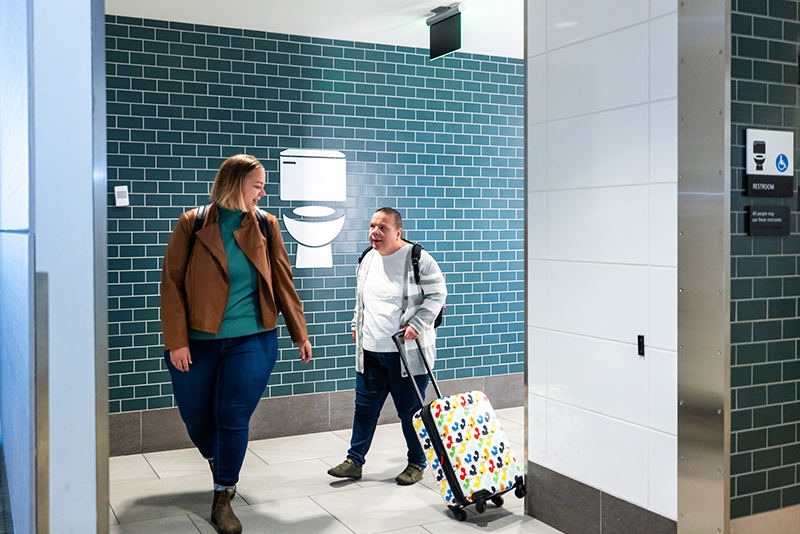
Restrooms have been updated throughout the airport to improve accessibility.
- SEA opened the all-gender restroom, located between gates D1 and D2, to create a space that is inclusive and accessible to people of all identities, abilities, and circumstances
- Family restrooms, or single-user restrooms, are available in all SEA concourses and are all fully accessible and ADA-compliant, which means they are designed to be accessed by someone using a wheelchair. Family restrooms are also stoma-friendly for those traveling with a stoma or ostomy bag
Learn more about accessible restrooms at SEA
Adult changing tables
SEA has seven adult-sized changing stations in companion care restrooms, located throughout the terminal, including one before security at Checkpoint 6. A new companion care restroom is now open on the third floor of the C Concourse Expansion, and an additional restroom will open soon on the Concourse Level of the space. This amenity provides a sanitary and private changing space for older children and adults who need assistance from a caretaker or companion. Use the interactive map on the Fly SEA app to find the most convenient option.
Accessible contacts
- Contact your airline in advance to request wheelchair assistance, access to the terminal, assistance boarding a plane, specific seat assignments, medication storage, or dietary needs
- Sign up for CLEAR Concierge, an optional, paid service s that offers personalized support including curbside greeting, bag assistance, and an escort through the CLEAR+ lane at the TSA checkpoints and onto your gate. Learn more or book through CLEAR
- Contact TSA Cares 72 hours before traveling to help plan your trip
Future accommodation
Our goal at SEA is to be creative and innovative in making our customer service, operations, and facility more inclusive. We conduct community outreach and meet with representatives of the disability community via SEA’s Accessibility Advisory Committee, which provides advice on how to improve accessibility for all travelers, and includes representatives from the disability community, airlines, and Port staff.
Through staff disability awareness trainings, technology,. and apps, the joy of therapy animals, or inclusive facilities like companion care restrooms and sensory rooms, we want to address your specific needs and improve your experience. Our community is a richer place when everyone can fully participate. Happy Anniversary to the ADA and its long-lasting impacts.