January 27, 2026
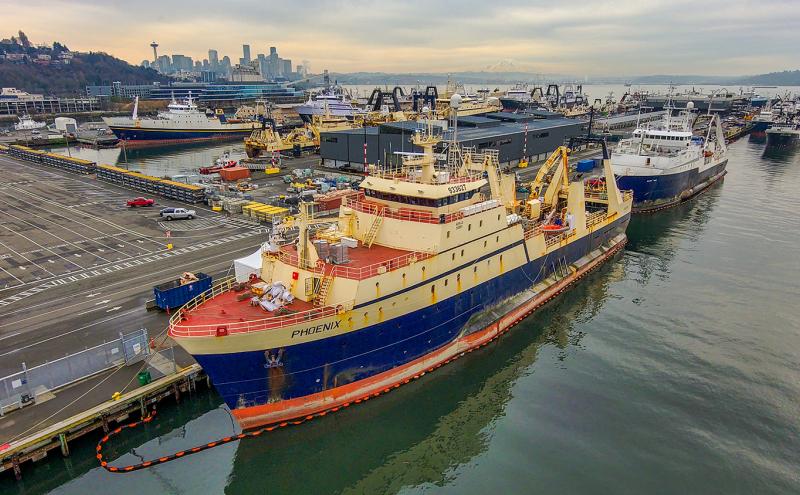
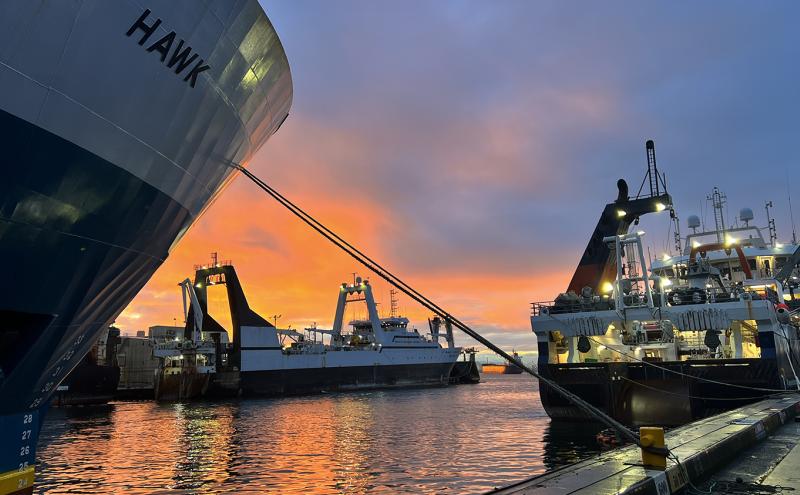
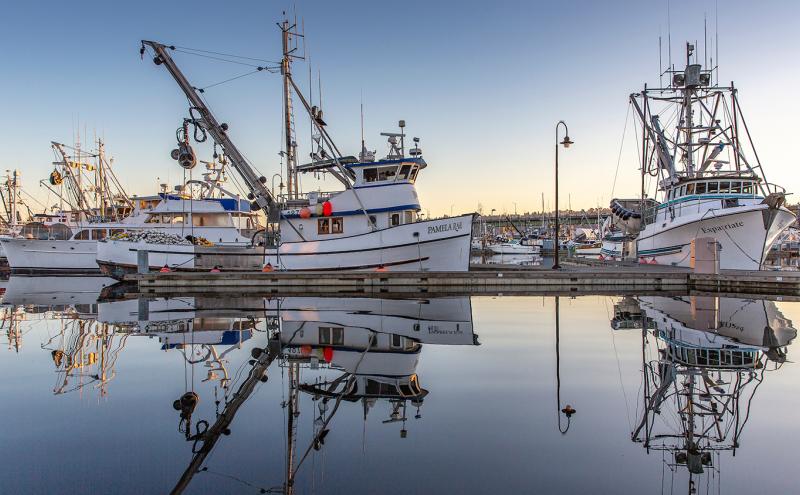
Fishermen's Terminal has been the home of the North Pacific fishing fleet since the facility opened in 1914, serving as a base for the fishers who help feed the world and power the economies of the Pacific Northwest and the state of Alaska. Today the terminal provides moorage for 400 commercial fishing vessels and work boats. Late May through early September, most of the fishing vessels head north to Alaska for salmon season. If you visit Fishermen’s Terminal and walk along the docks, you will catch a glimpse of these hardworking vessels up close. Here’s more about what you might see:
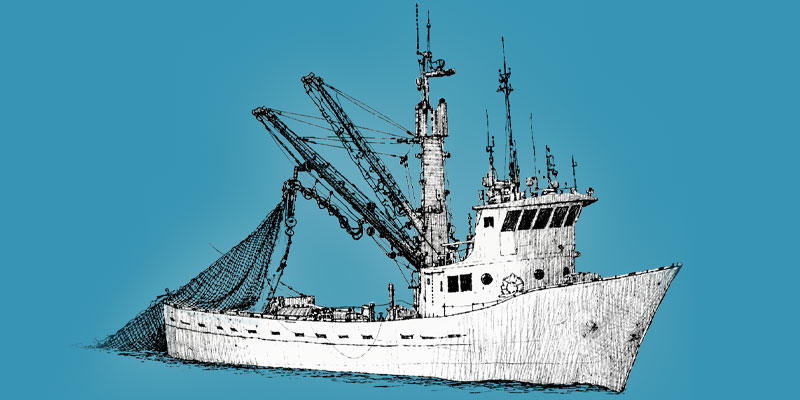
Purse Seiner
Catching: Salmon and herring
Key gear: Giant net with float and lead lines, power skiff, hydraulic winch
Purse seine vessels range from small-scale open boats operating in coastal waters to large-scale industrial fishing vessels that sail the high seas. They are used in the open ocean alongside a smaller boat to target dense schools of single-species pelagic (midwater) fish.
How it works: When a fishing boat locates a school of fish, a smaller boat or power skiff will hold the net while the seiner completes a circle around the fish, with a long net suspended like a curtain. The bottom of the net then gets cinched shut like a drawstring purse — trapping fish inside. The top edge of the net stays at the surface because of its float line and the bottom of the net falls vertically because of its weighted lead line.
For large catches, a larger vessel uses a fish pump to transport fish from the purse seiner into a larger vessel.
Spot the vessel:
- Sleek, cabin-forward vessels that are limited by Alaska law to 58 feet
- Long, clean decks, boom with power block, net stacked on the back
- Power skiff often seen riding “piggyback” aboard the vessel’s stern while it is traveling
Did you know? A purse seine net can be more than a mile in length and reach around 600 feet in depth. The size varies depending on the vessel it's deployed from, the size of the mesh, and the species it is attempting to catch.
End products: Salmon ends up canned or frozen. Herring may be used as bait — or transformed into kazunoko, a delicacy in Japan.
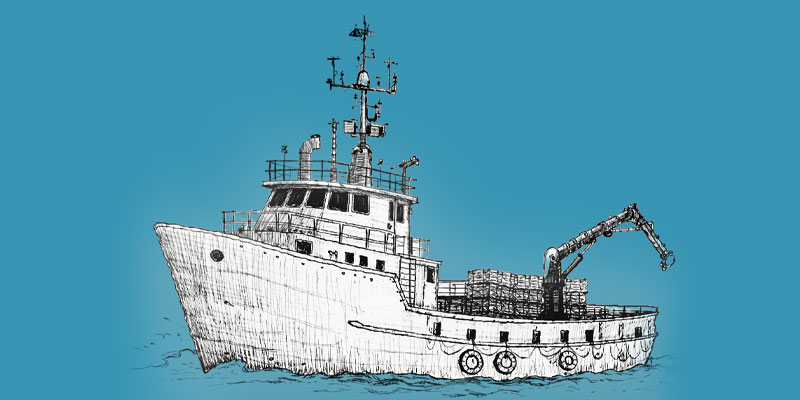
Crabber
Catching: Dungeness, King, and Tanner crab
Key gear: Steel or twine pots, bait (like herring), buoys
How it works: Crabbers do exactly what their name suggests — they catch crabs! Using baited pots (underwater crab traps), these boats drop their gear to “soak” for a few days. A floating buoy marks each pot’s spot, and a power winch hauls them back aboard. Only legal-sized males are kept; females and smaller crabs go back in the water.
Smaller round pots are used for Dungeness in shallow bays and estuaries, and the large, heavy, rectangular pots are placed in waters deeper than 100 feet for King and Tanner crab.
Spot the vessel:
- Small aluminum skiffs for shallow waters
- Sturdy 100-footers braving the Bering Sea
- Can be hard to identify unless its decks are stacked with pots
End products: They’re delivered live to shore, then cooked, canned, sold fresh or frozen, and sometimes even sold live in local markets.
Troller
Catching: Salmon — chinook, coho, and pink
Key gear: Lines with lures or bait, “cannon ball” sinkers, hand cranks or hydraulic spools
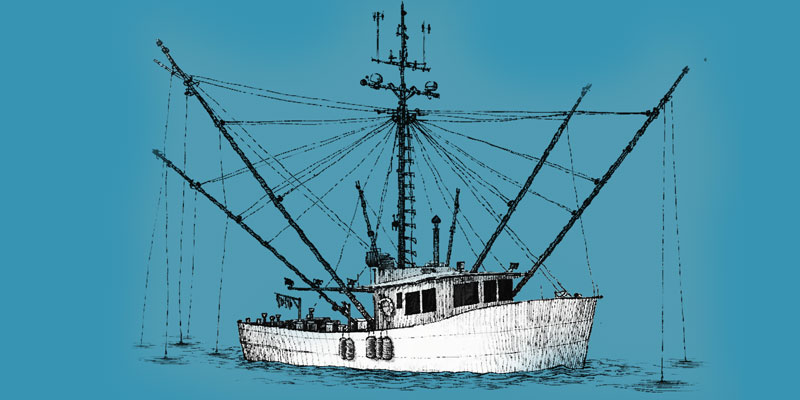
Trolls are often known as the creature living under a bridge or the person spamming your latest social media post with negative comments. But in the fishing world, trollers are graceful boats towing baited lines to lure salmon. These vessels usually run four to six lines at once, each with multiple hooks spaced out along the length.
How it works: The technique works by trying to trick the fish into thinking the bait is moving prey. To retrieve hooked fish, the main lines are wound about small, onboard spools via hand crank (hand trollers) or with hydraulic power (power trollers).
Fun fact: The name “troll” comes from the German word trollen, referring to the revolving action of the bait.
Spot the vessel:
- Small skiffs with hand cranks
- 50-footers with hydraulic power
End products: Troll-caught salmon are prized for their high quality. They're dressed at sea and delivered fresh or frozen — perfect for fine dining.
Trawler
Catching: Pollock, flounder, pink shrimp, and other midwater or bottom fish
Key gear: Huge cone-shaped net, heavy doors, stern ramp
Trawlers are sometimes confused with trollers due to their similar sounding names, but there are few similarities.
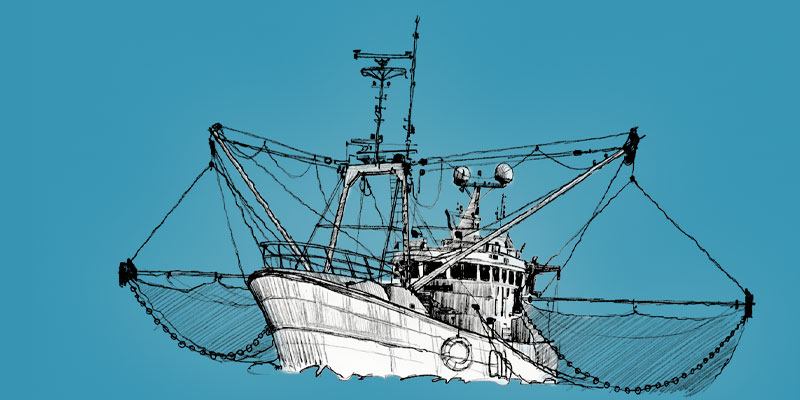
How it works: Trawlers tow massive, cone-shaped nets (that can be several hundred feet long) behind them, scooping up fish either from midwater or along the sea floor. Most trawl nets have “doors” on either side of the net’s opening to help hold it open, and some have a heavy chain strung along the bottom of the opening to hold it close to the sea floor. Eventually the fish tire and drop back into the closed, narrow end of the net where they are finally caught. The net is connected to the boat by industrial-strength cables, and the net opening is spread by two large boards called otter boards. As the boat pulls the net through the water column, fish are herded within the wide "mouth" of the net.
Spot the vessel:
- Medium trawlers for flounder and shrimp
- Massive factory trawlers (up to 600 feet!) that process up to 100 tons of fish or more right on board
End products:
- Flounder fillets
- Shrimp (whole or headed and frozen)
- Pollock surimi for fish sticks and imitation crab
Longliner
Catching: Halibut, blackcod, rockfish, lingcod
Key gear: Longline with baited hooks, buoys, power winch
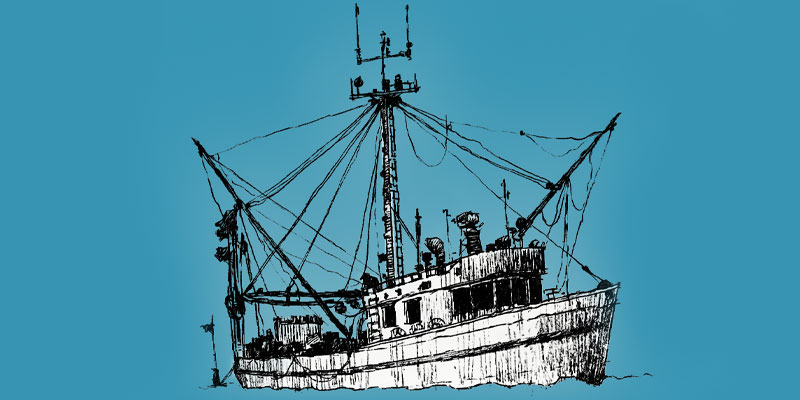
How it works: These boats lay out longlines — sometimes a mile long! — on the ocean floor. Each line has thousands of baited hooks attached at intervals via short branch lines called ganglions. The ends that run to the surface are marked with buoys with flags. After soaking for 24 hours, the lines are hauled back in, one fish at a time over a side roller with a power winch.
Spot them by:
- Weather covers on the stern
- Orange buoys tied to the rails
- Coiled lines stacked in tubs on deck
- 50 feet to 100 feet in length
End products: Fish are bled or dressed at sea, then packed in ice for ultra-fresh delivery to markets. Most vessels in this fishery can pack 20 to 40 tons, or more, of iced product. Fish are delivered whole and bled, or whole and gutted, or headed and gutted for sale to fresh and frozen markets.
Gillnetter
Catching: Salmon — sockeye, chum, and coho
Key gear: Curtain-like net with float line and lead line
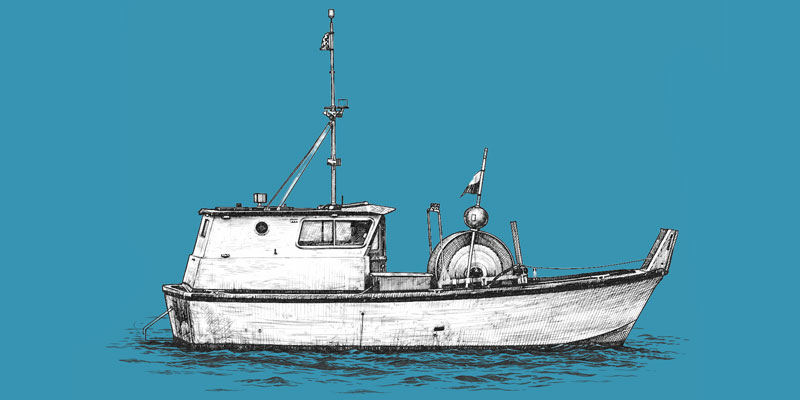
How it works: Gillnetters work by quietly stringing their nets across the fish’s migration path. The net’s mesh is just big enough to catch male salmon by the gills (hence the name), letting other fish slip through. The net has a float line on the top and a weighted lead line on the bottom. The end of the lead line is attached to a hose ring or engine belt. Gillnetters are best used in silty waters, where nets are harder for fish to spot.
Spot the vessel:
- Look for orange buoy balls between the net and boat
- 30-40 feet long
- Drum on either the front or the stern where the net is rolled
End products:
- Salmon is iced and delivered to buyers and cold storages
- Canned or frozen final product
Subscribe to Pier to Pier for adventures on the working waterfront